
Free
When some people pray, they put their palms together near their face. An insect that holds its two front legs in a similar position is known as a praying mantis.
Praying mantises are part of a large group of insects called praying mantids. There are about 2,500 different kinds of mantids. They live on every continent except Antarctica. Between half an inch and 18 inches long, they are fierce predators. And they’ll dine on almost anything. From flies to crickets. From grasshoppers to moths. Larger mantids eat frogs, lizards, and even small birds.
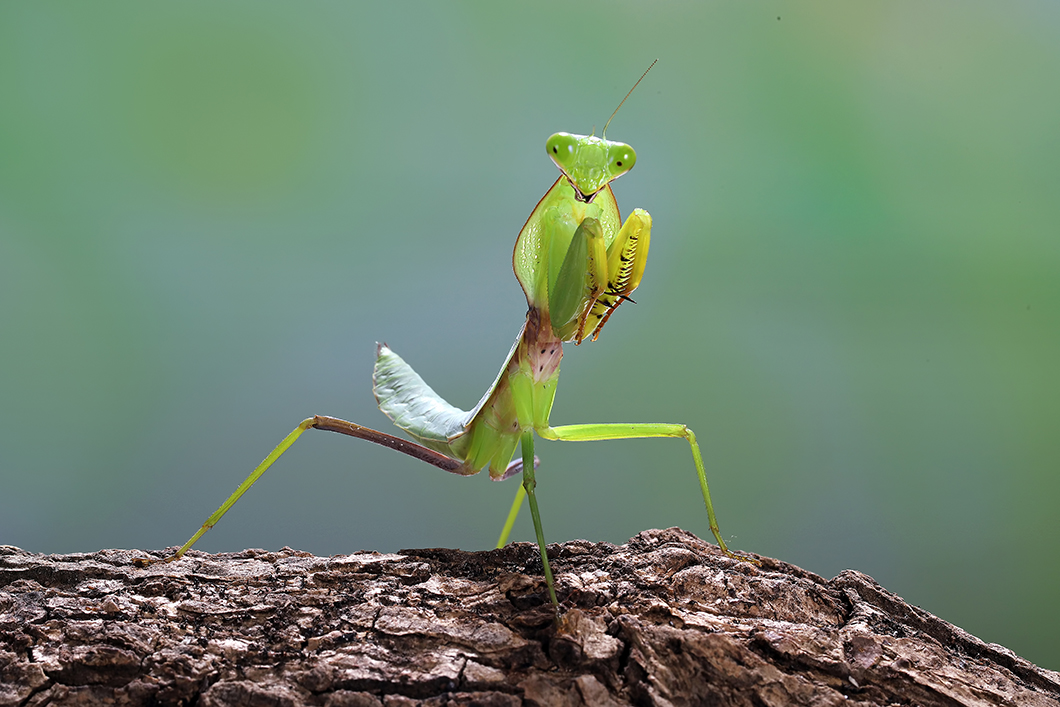
▲ Like other insects, praying mantises have the usual three body parts – head, thorax, and abdomen. But that’s where “usual” ends. Their one ear is in the middle of their body, between their back legs. They can turn their head halfway around. And they have spikes on their front legs to catch and hold prey.
Praying mantises do not have lungs. Instead, they have openings on the sides of their body. The openings are connected to a system of tubes in their body. Air enters through the openings and passes into the tubes. The tubes carry the air to all parts of the mantis’s body. ▶
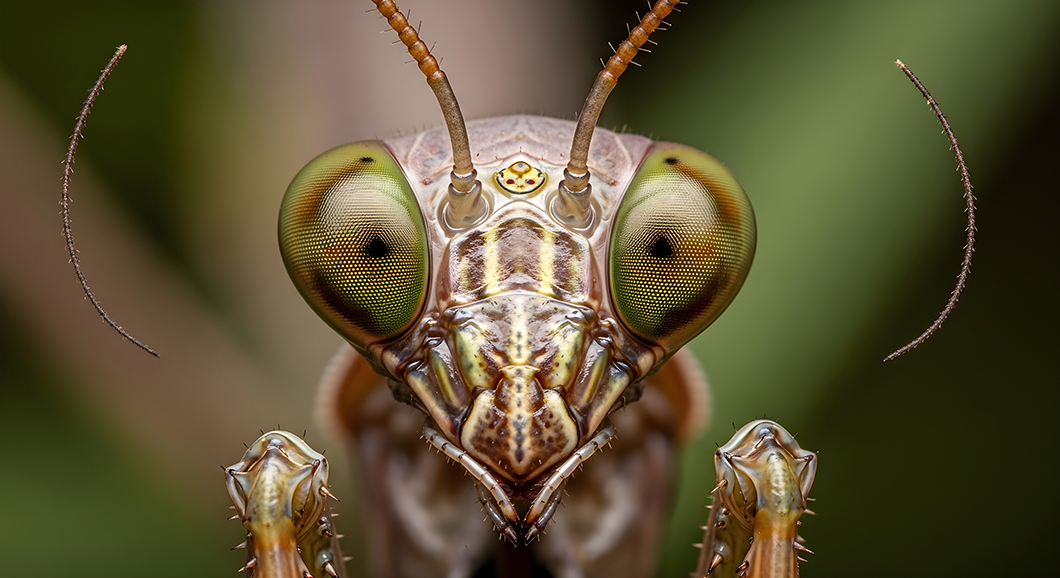
▲ Praying mantises have excellent eyesight. And it’s no wonder. They have five eyes! Their two large eyes sense movement and depth. Plus, they allow the mantis to look left and right. Three smaller eyes help the mantis sense changes in light. They allow it to track and capture prey with amazing accuracy.
Loading the player...
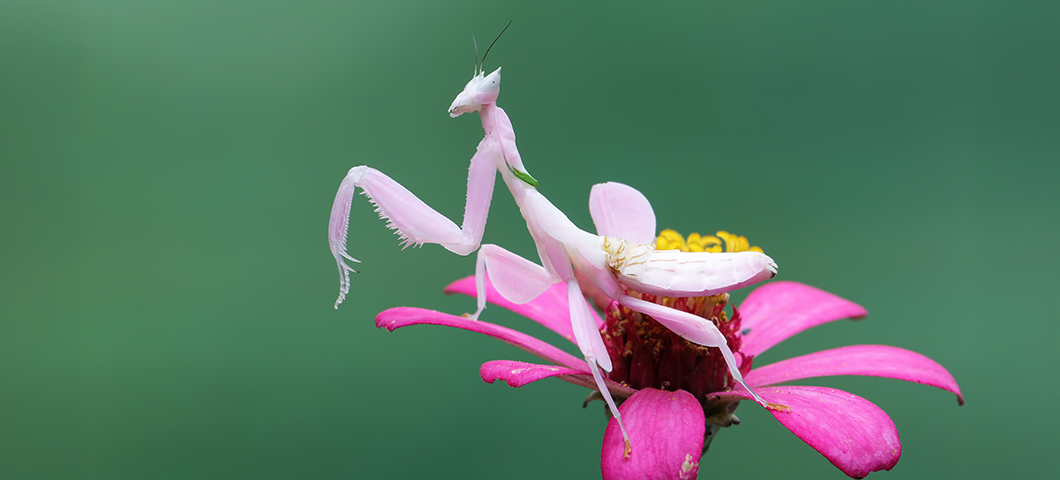
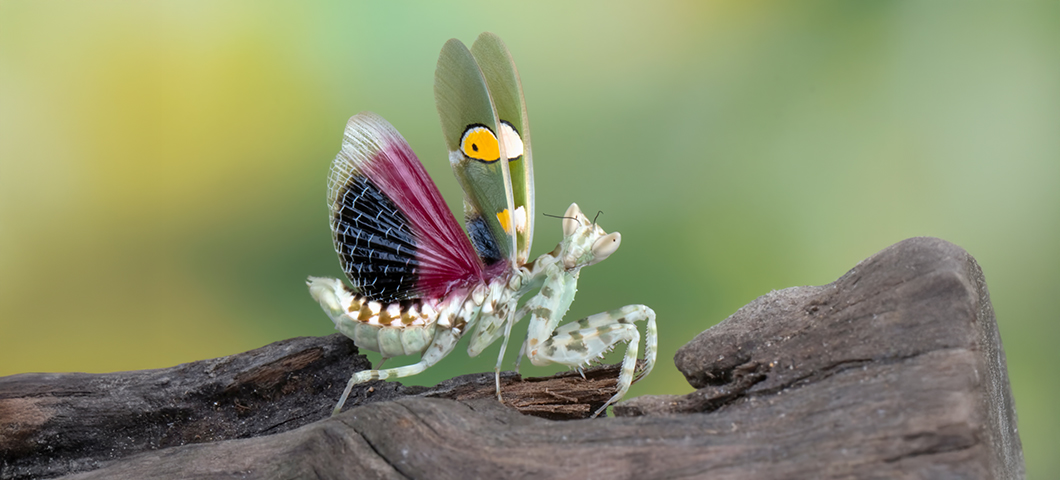
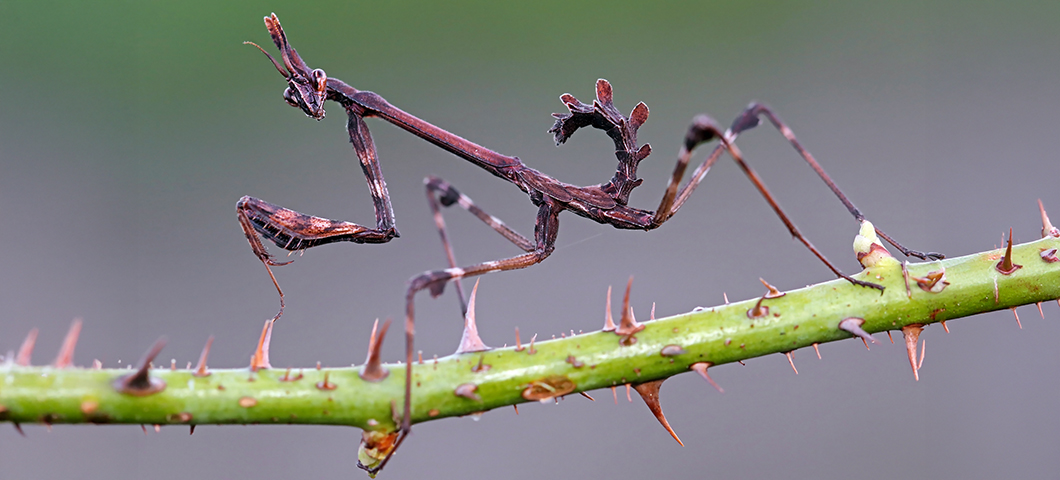
▲ Most praying mantises are camouflaged. That means they look like their surroundings. This makes it hard for enemies to see them. To hunt, they stay very still and wait for prey to come near. Then they strike. In less than a second, they grab their meal and start eating . . . often head first!
Check It Out!
Are praying mantises beneficial?
The answer is yes and no. Praying mantises will feed on any living thing they can capture. That means flies, mosquitoes, and garden pests. In this way, they can benefit a garden. On the other hand, they may also feed on insects that are helpful, like bees and butterflies. In this way, they can harm a garden.
The Marvelous Mantis
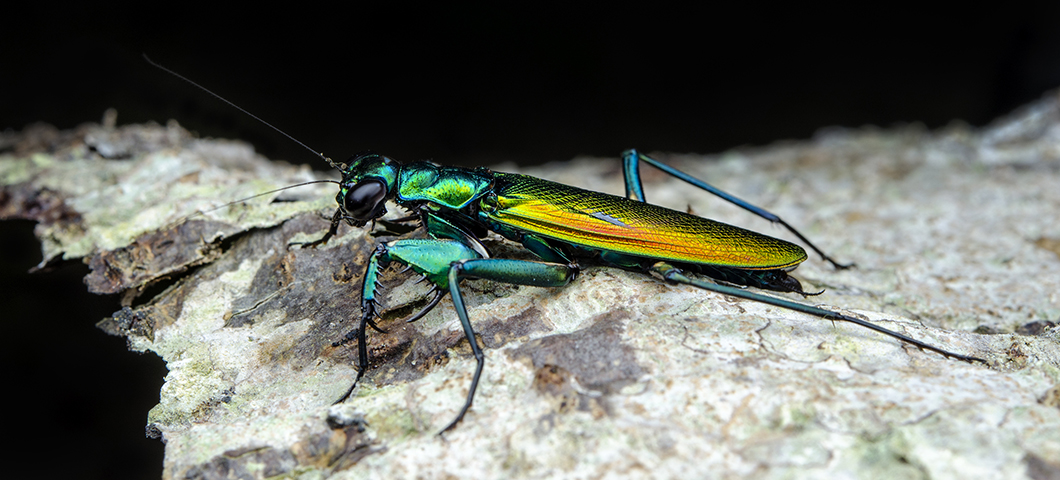
The iridescent bark mantis is known for being shiny. Most live underneath the bark of dead tree trunks. There, they may feed on cockroaches and flies.
