
Free
They have no brain, no heart, no blood, no bones, and no teeth. Yet they’re living things that have been around longer than dinosaurs. And some of them can live practically forever.
They’re jellyfish. But in spite of their name, they’re not really fish at all. Jellyfish float near the surface of the world’s oceans, but also in its deepest depths. One kind of jellyfish lives in freshwater streams, ponds, and lakes. Might a jellyfish sting an unsuspecting swimmer? Yes. The swimmer might feel a burning or prickling sensation, but the sting is usually not dangerous.
Loading the player...
▲ Most jellyfish have poisonous tentacles and a bell-shaped body that’s 95 percent water. Their mouth is on the underside of the bell. To move, they squirt water from their mouth, which pushes them in the opposite direction. Instead of a brain, jellyfish have a network of nerves that allows them to sense light, gravity, and touch.
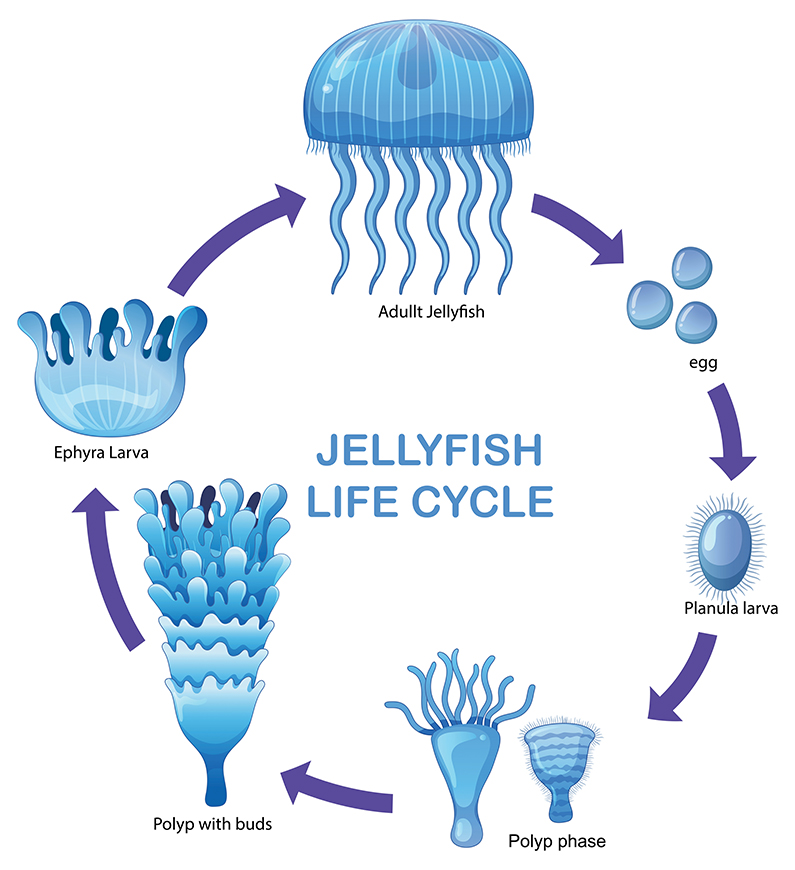
▲ A jellyfish egg grows to become a larva called a planula. The planula attaches itself to the seafloor. Then it develops into a polyp with tentacles that catch food. When conditions are right, buds form on the polyp. Each bud breaks away to become a larva called an ephyra. Many grow to become adults.
Check It Out!
How long do jellyfish live?
Small jellyfish live for a few days. Others may live for many years. One kind of jellyfish is said to live forever. That’s because the adult jellyfish can actually turn back into being a polyp. This may happen if the jellyfish is sick or injured. Then the change starts all over again.
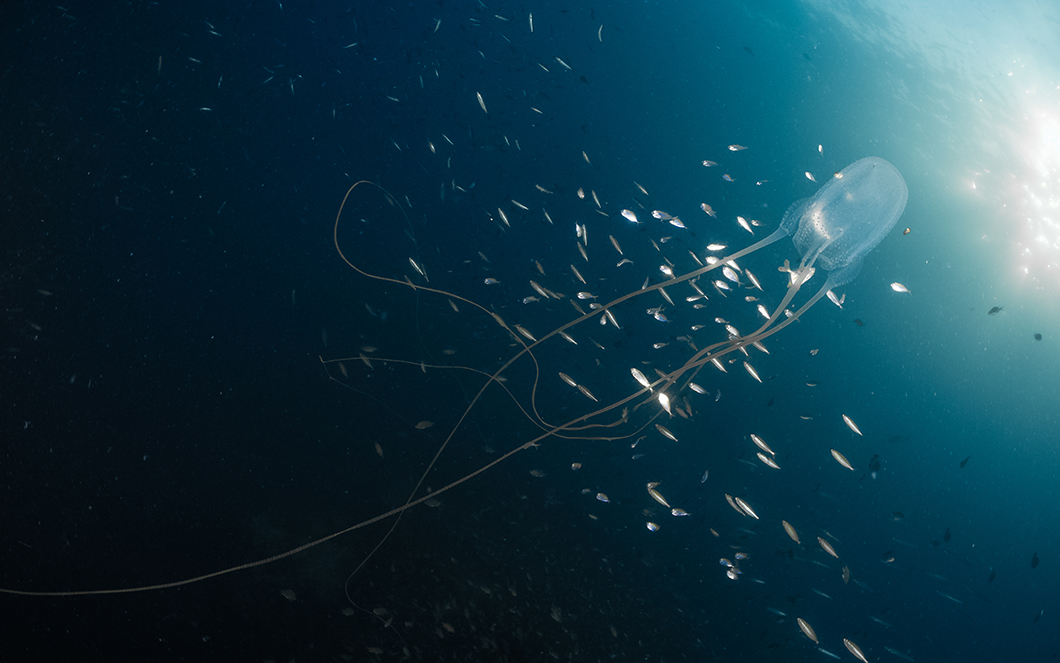
▲ Jellyfish feed mostly on tiny plants and animals, fish eggs, and small fish. Their tentacles act like a net to surround prey. Each tentacle is lined with sharp barbs that shoot poison into a victim. The poison paralyzes the prey, so it can’t escape. The jellyfish then moves its meal to its mouth.
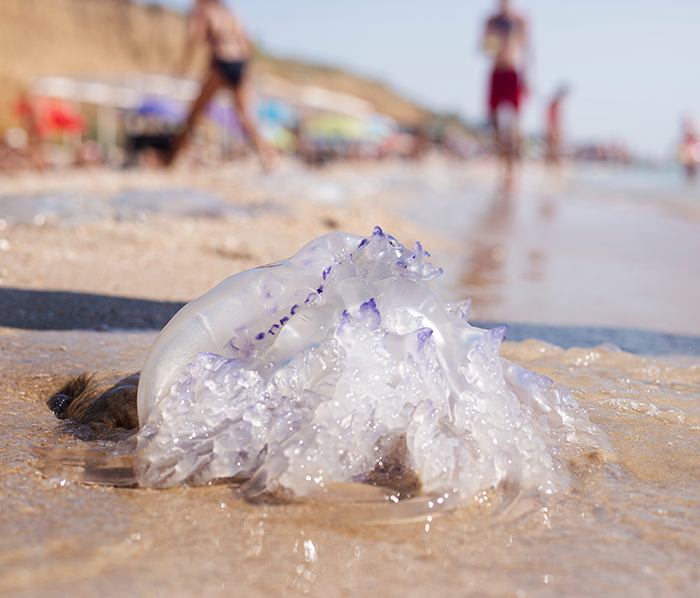
◀ Jellyfish are not strong swimmers. They can get washed ashore by storms, strong winds, and tides. Even by the current, or movement of the water. Once jellyfish are onshore, they dry out quickly. But the barbs on their tentacles don’t. So they can still deliver a wallop of a sting.
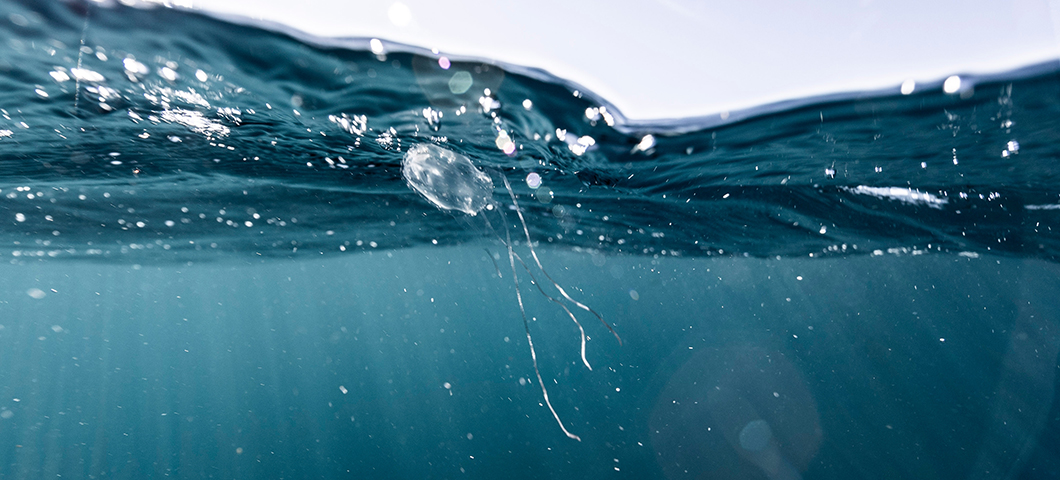
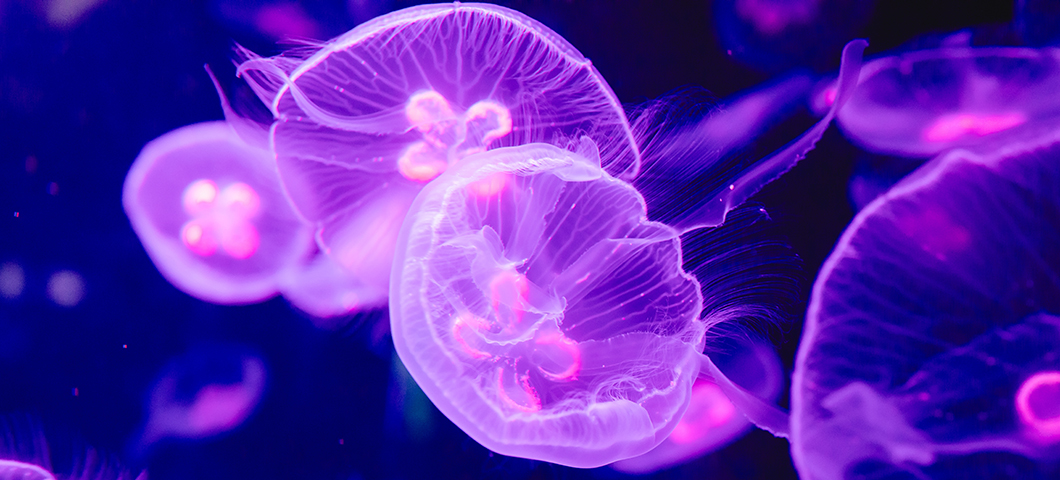
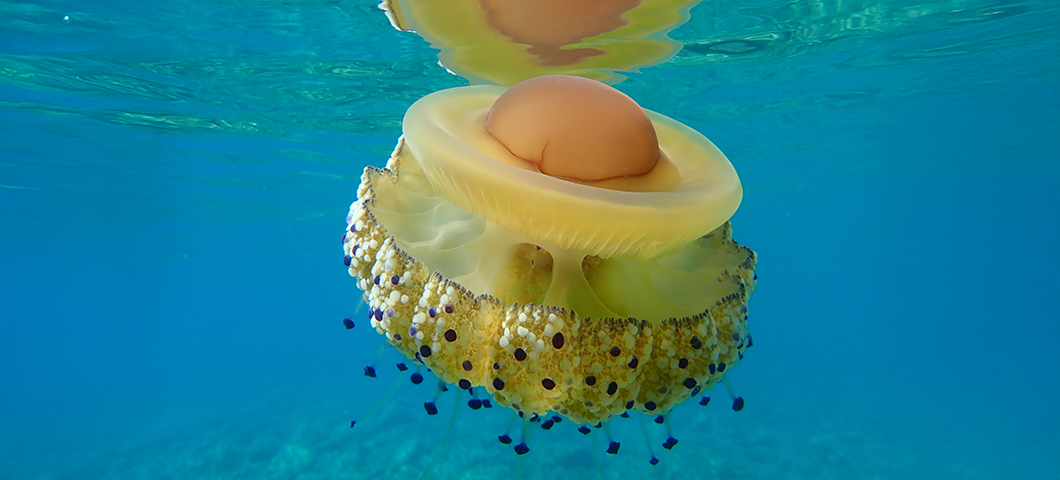
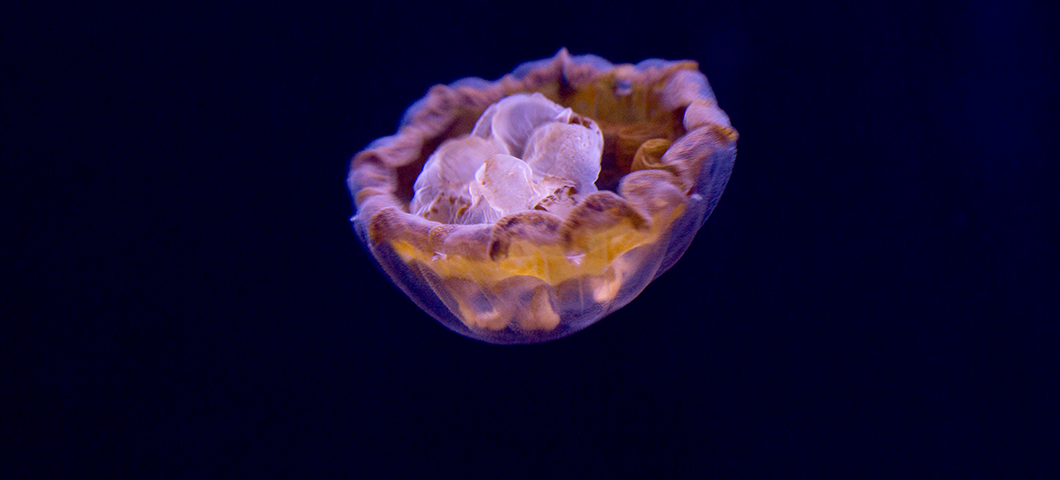
Amazing Jellyfish
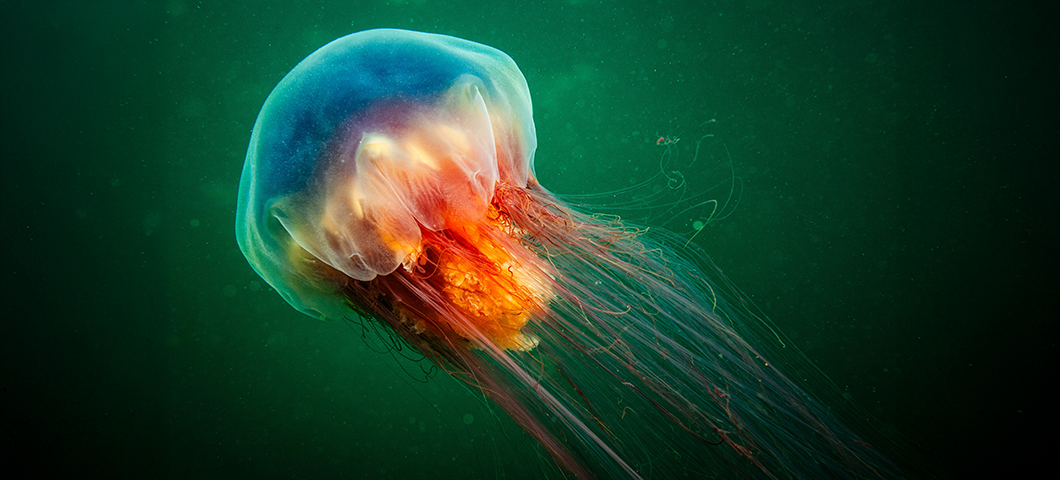
The lion’s mane jellyfish is the biggest of them all. It may be more than 100 feet from its bell to the end of its tentacles.
