
Free
A crocodile is not a creature you want to tease. It’s big. It’s strong. And it has the most powerful jaws of any animal, with a bite stronger than that of a great white shark.
Crocodiles are the largest of all reptiles. Of the 16 different kinds, the biggest can grow to be more than 20 feet long and weigh more than 2,000 pounds – almost as much as two cars. Crocodiles eat just about anything they can catch. That includes fish and turtles as well as birds and other land animals that come close to water. Even other crocodiles.
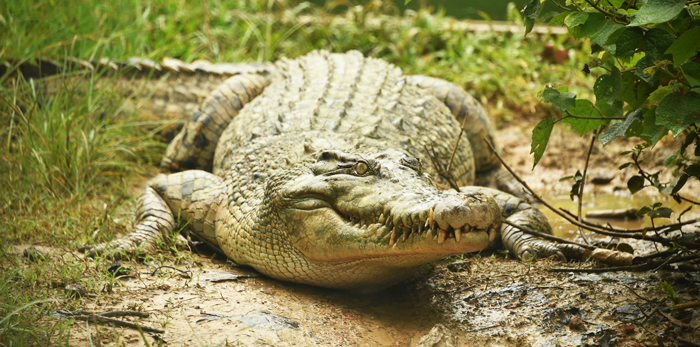
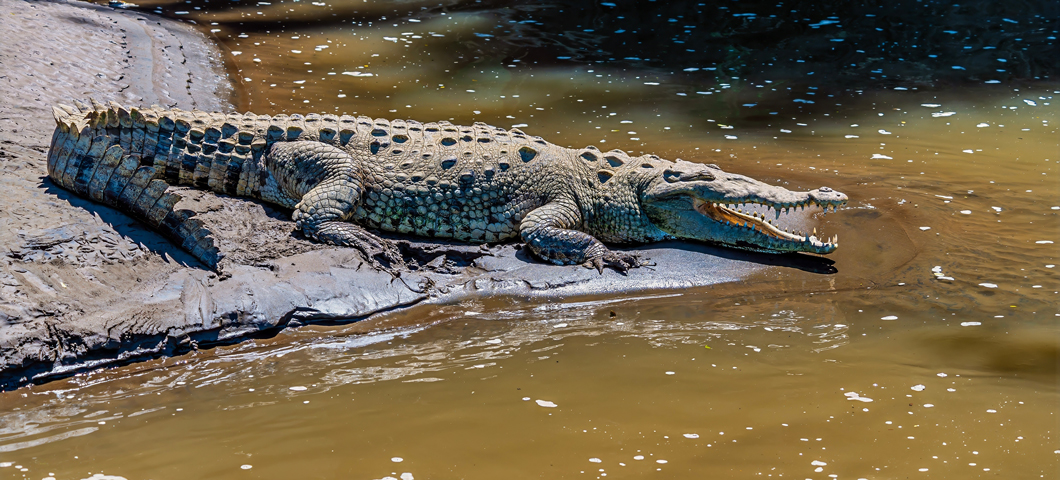
◀ A crocodile’s body is set up for hunting. Its eyes, nostrils, and ear openings are on the top of its head. This lets it sense its surroundings even when the rest of its body is underwater. The side-to-side motion of its powerful tail allows it to swim 15 miles an hour chasing a tasty meal.
Loading the player...
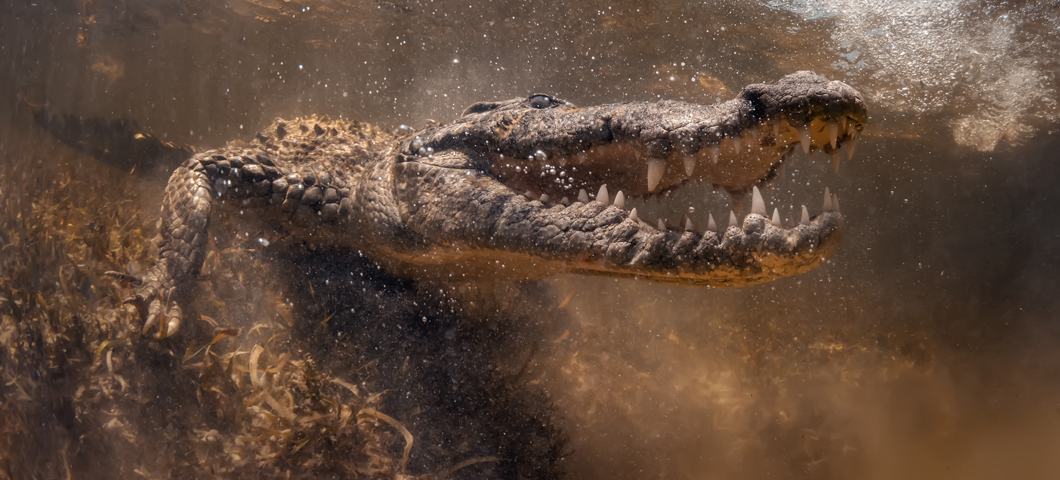
▲ Crocodiles hunt by lying in wait for their prey. When the moment is right, boom! They latch onto their victim. With a meal between their jaws, they roll over in what’s called a “death roll.” The motion is so powerful that it tears the prey to pieces, which are swallowed whole.
Unlike many reptiles, female crocodiles care for their young. They start by digging a hole near water, laying their eggs, and then covering the hole. They stay near the nest to guard it until the eggs hatch. After that, they carry the young to water and stay nearby to protect them for several months. ▶
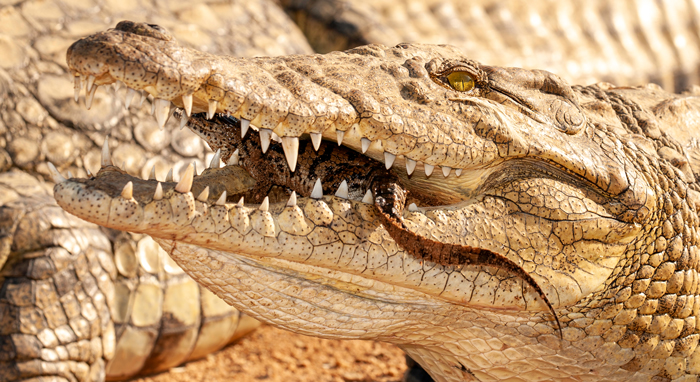
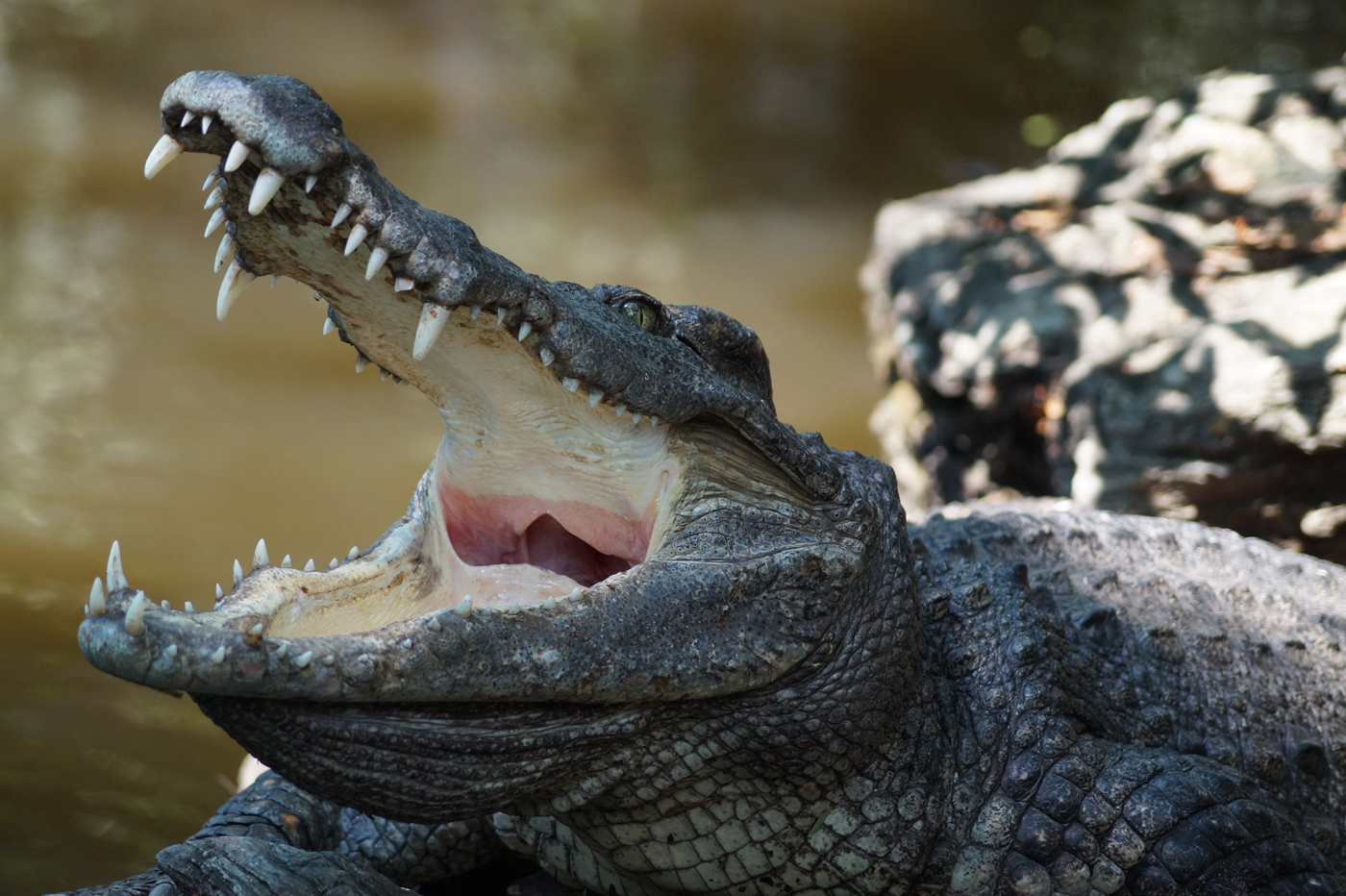
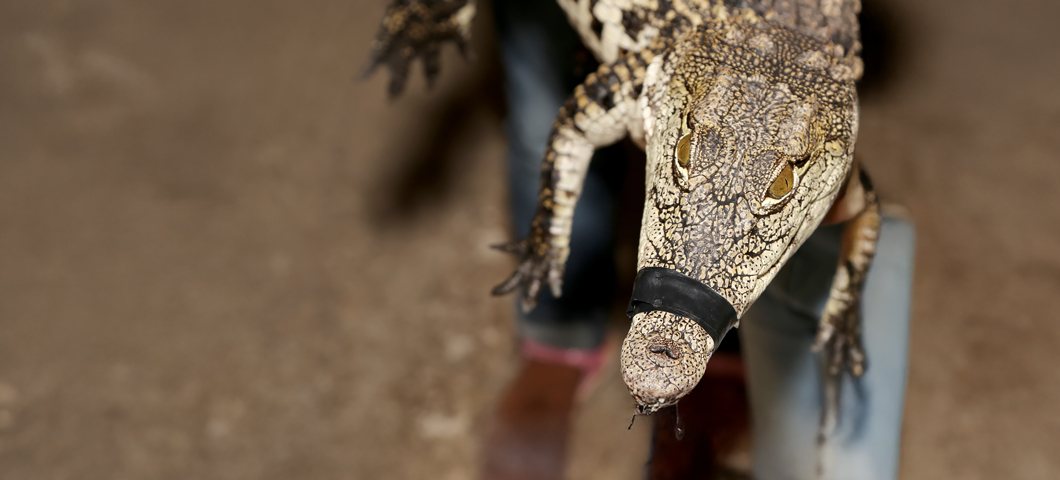
A crocodile can bite down with tremendous strength, but the muscles needed to open its jaws are so weak they can’t even break tape.
Check It Out!
How are crocodiles helpful?
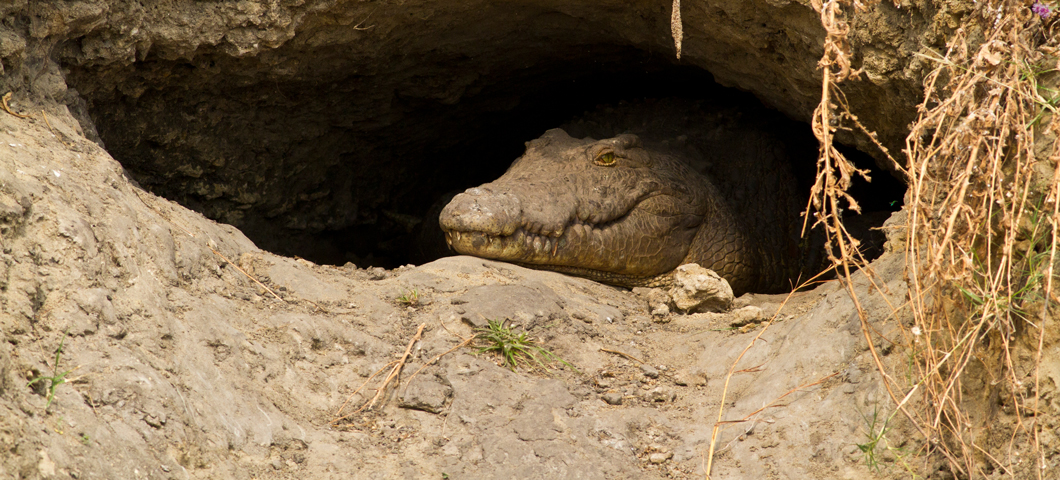
Crocodiles are sensitive to changes in their environment. If the crocs in an area die off, it may show there’s a problem in the water, perhaps pollution. Crocodile burrows are helpful too. They may serve as shelter for birds or young fish. This helps keep up the diversity, or number of different animals, in an area.
