
Free
Remember using your fingers as you sang “Itsy Bitsy Spider” when you were younger? At the time, you probably were thinking about a small garden spider, not a black widow spider.
Black widow spiders live in the northern, southern, and western parts of North America. They are thought to be the most deadly spiders on the continent. Their venom is said to be 15 times stronger than the venom of a rattlesnake. A bite from a black widow spider needs medical attention. It will make a person feel sick. It may cause muscle pain, fever, and chills.
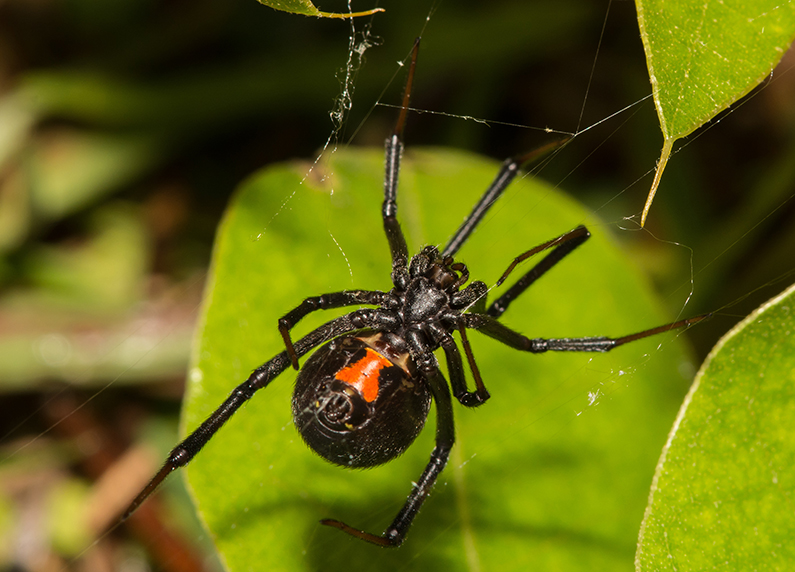
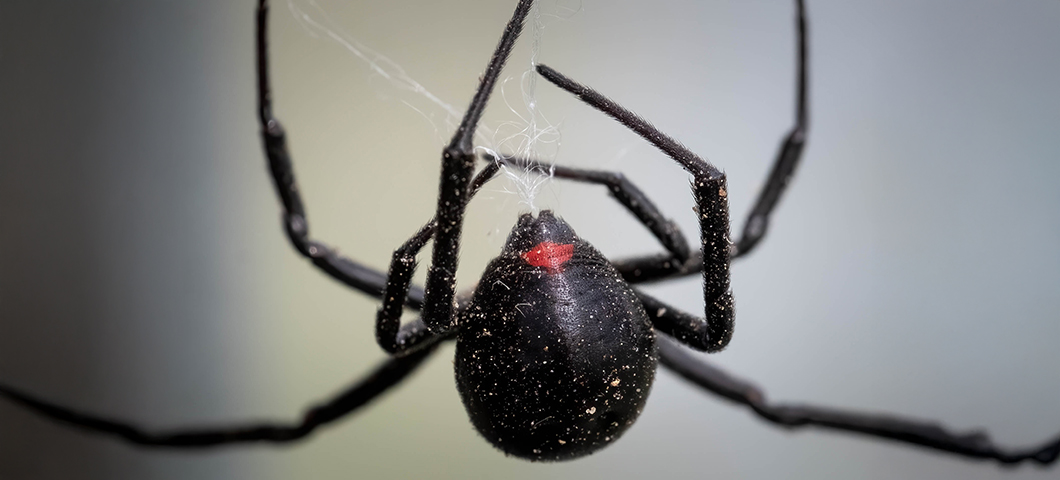
Have you seen a spider with tiny bristles on its hind legs? With a body shaped like a globe? With a red mark that looks like an hourglass? If so, you’ve probably seen a black widow spider. The marking may also be yellow or orange. And it may be shaped like two half-moons instead of an hourglass. ▶
Check It Out!
How did black widow spiders get their name?
A widow is a female whose mate has passed away and left her alone. Scientists have observed female black widow spiders in a laboratory eat their mate, leaving her “alone.” This doesn’t happen often in nature. But it happens often enough in a lab to earn the spiders their name.
A black widow spider’s web looks like a tangled mess. But it’s not. It has three different parts. One part is a “sheet” where the spider can rest and move around. The “sheet” hangs from threads attached to a surface above. That’s the second part. Hanging down from the “sheet” are sticky threads for catching insects. That’s the third part. ▶
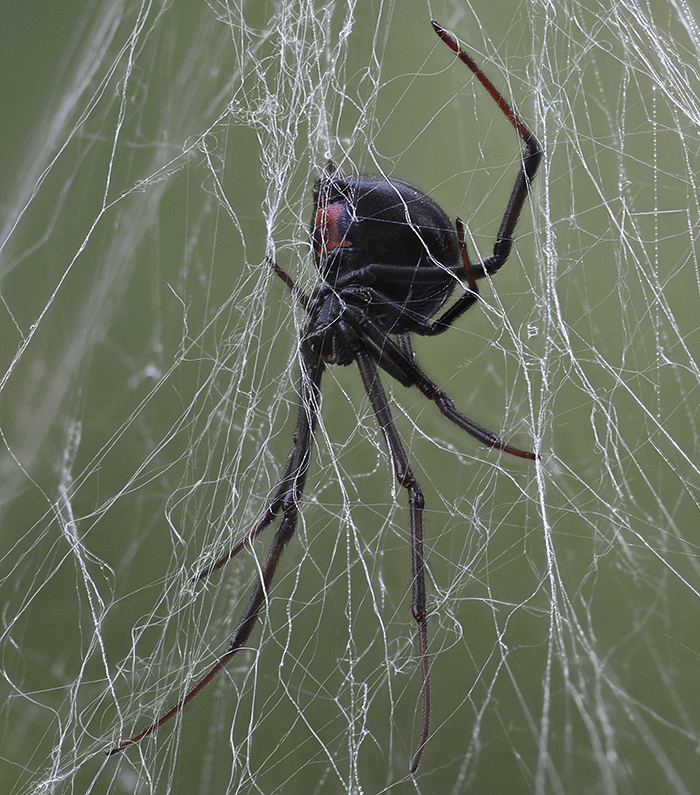
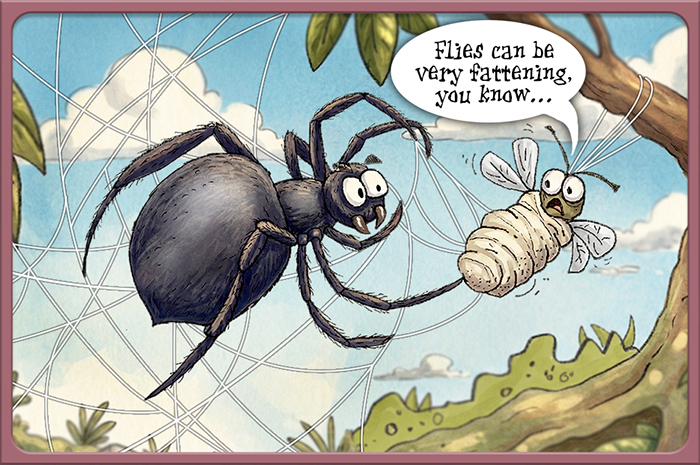
▲ The black widow spider feels vibrations in its web when an insect gets stuck there. Once that happens, the spider wraps the insect in silk. That way it can’t move. Then the spider injects a deadly venom that paralyzes the insect. Finally, it covers the insect with digestive juices and soon swallows its meal.
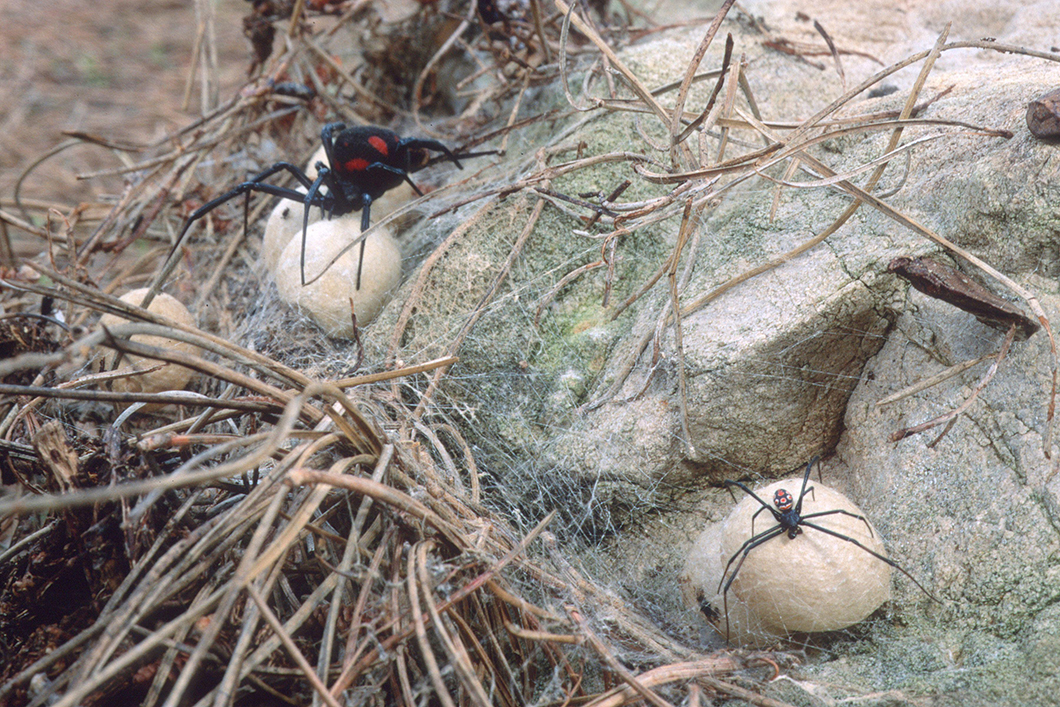
▲ A female black widow spider may make one or more cocoons, or egg sacs. The sac is made from tightly woven silk threads. It feels like paper. Each sac usually holds 200–250 eggs. The female protects the sac from enemies until the babies hatch. That may be 20 or 30 days.
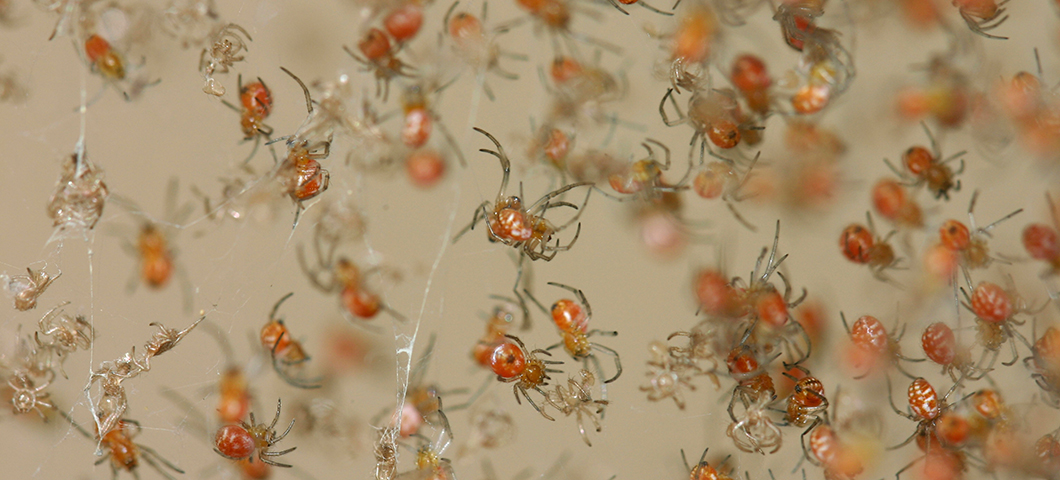
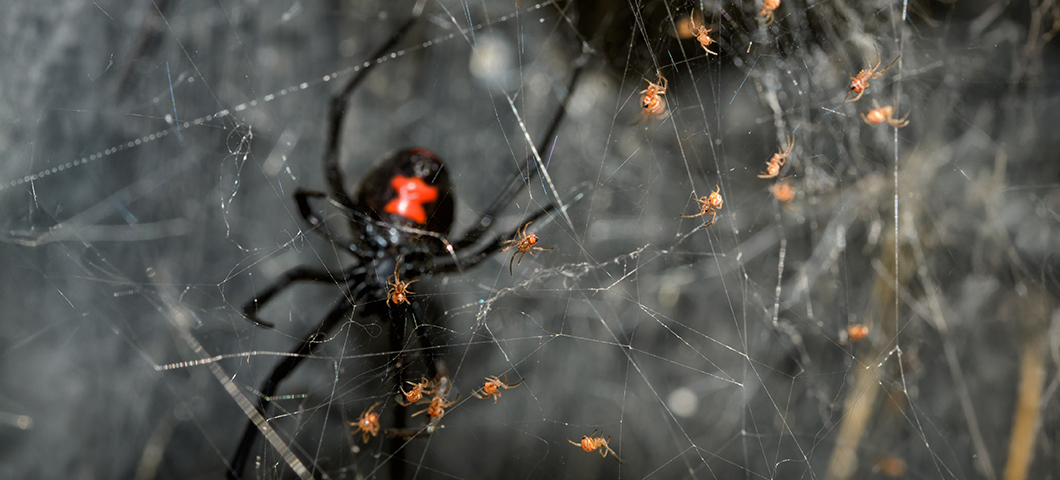
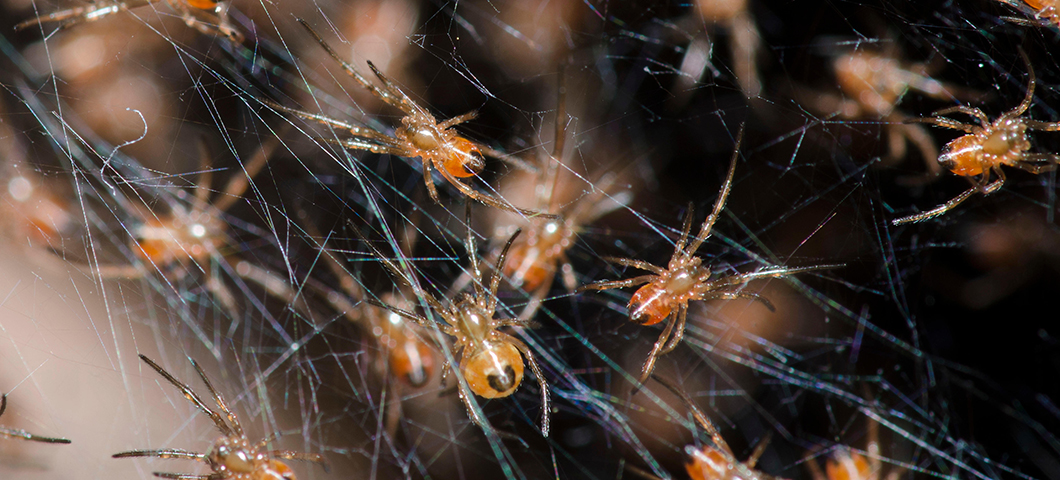
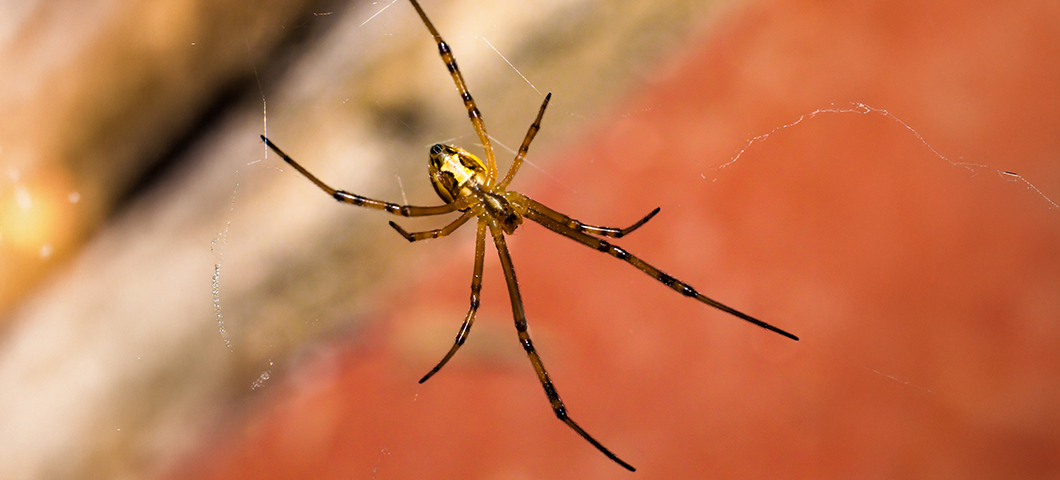
Black widow spiderlings, or babies, may be white, orange, or brown. They molt, or shed their skin, as they grow, each time becoming darker.
