Free
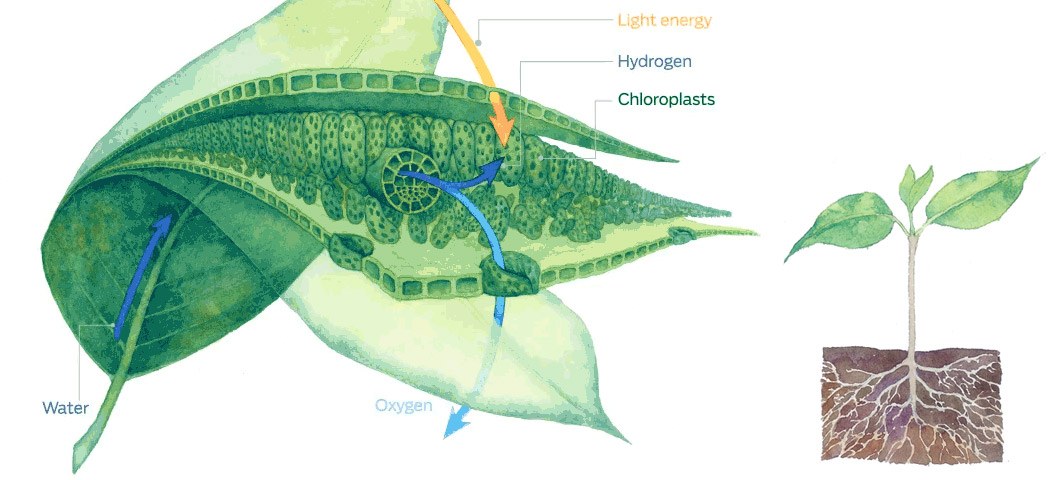
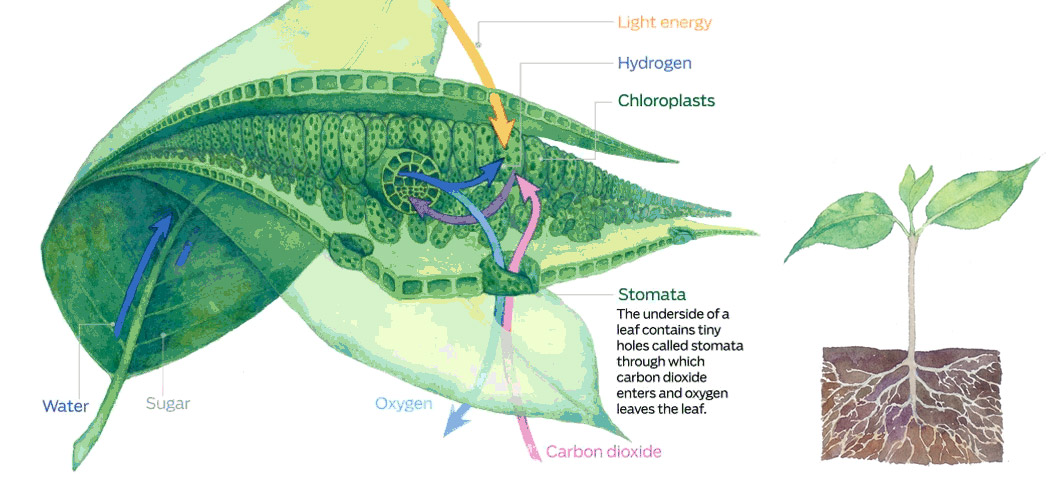
Light. It’s an ingredient for what may be the most important recipe on the planet. Water and carbon dioxide are other key ingredients. The recipe is for photosynthesis, the process by which plants make the food they need to live and grow.
The word “photosynthesis” means “putting together with light,” a phrase that accurately describes what occurs in plants. The food-making cells in plants use light energy to combine water and carbon dioxide. The light energy may come from the Sun, or it may be from an artificial source, such as a light bulb. In either case, the outcome of the process is sugar. Plants use this sugar, plus nutrients from soil, to make proteins, vitamins, and other substances necessary for life.
This is it in a nutshell: Without light energy there would be no sugar, and without sugar there would be no plant life. Without plant life, there would be no animals or people.
The Food Chain
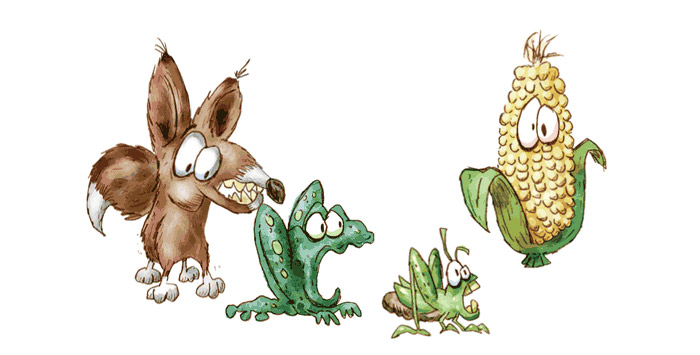
Plants depend on light, and people and all other animals—even the fully carnivorous animals—depend on plants. That’s because plants are the first link in the food chain.
A food chain explains how food connects various different living things. The world is home to countless food chains, and the one here shows how foxes and plants are linked.
Reaching for the Light
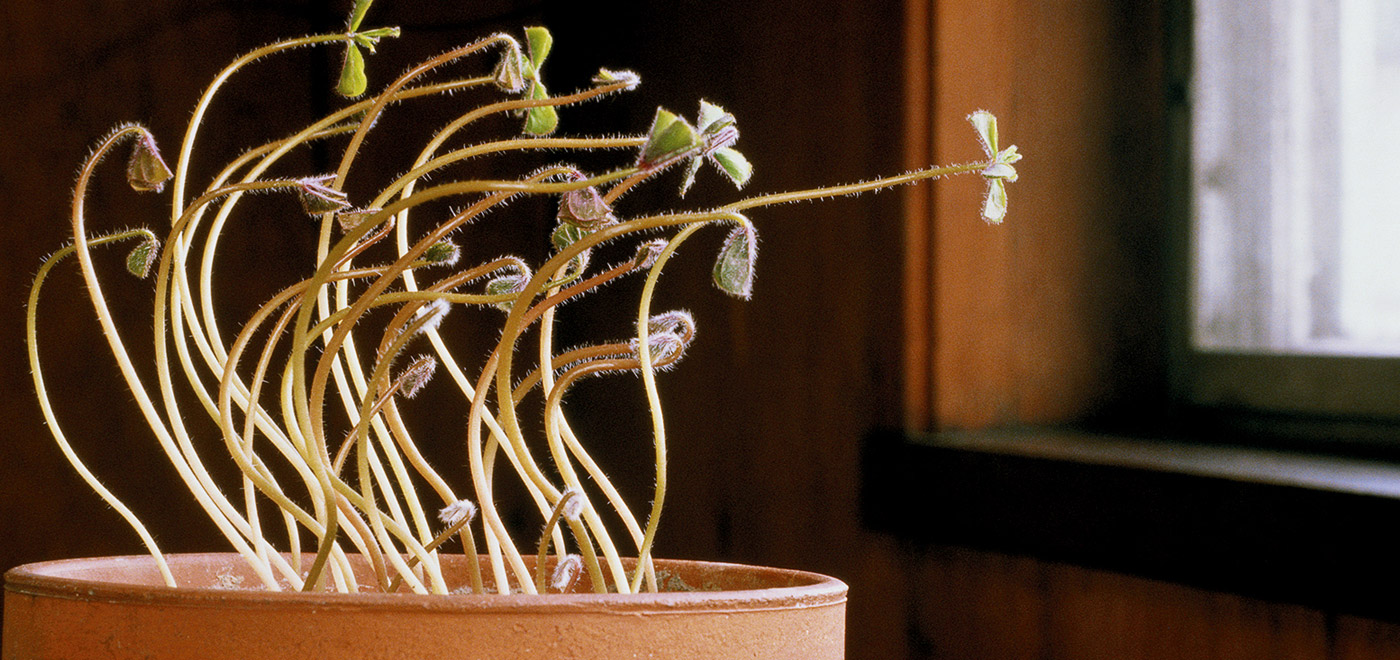
Light is so important to the survival of plants that they seem to reach toward it. But how does a plant “know” which way to grow? A plant may not have eyes to tell it where the light is, but a plant does have hormones. Hormones are substances produced by plants (and animals) that regulate growth and development. Auxins are hormones that affect the growth of plant cells. Auxins cause cells on the shady side of a plant to grow faster than cells on the sunny side. As a result, a plant’s stem may bend toward light to allow as much light as possible to reach the maximum number of food-making cells. This phenomenon is known as phototropism.
How Photo- synthesis Works
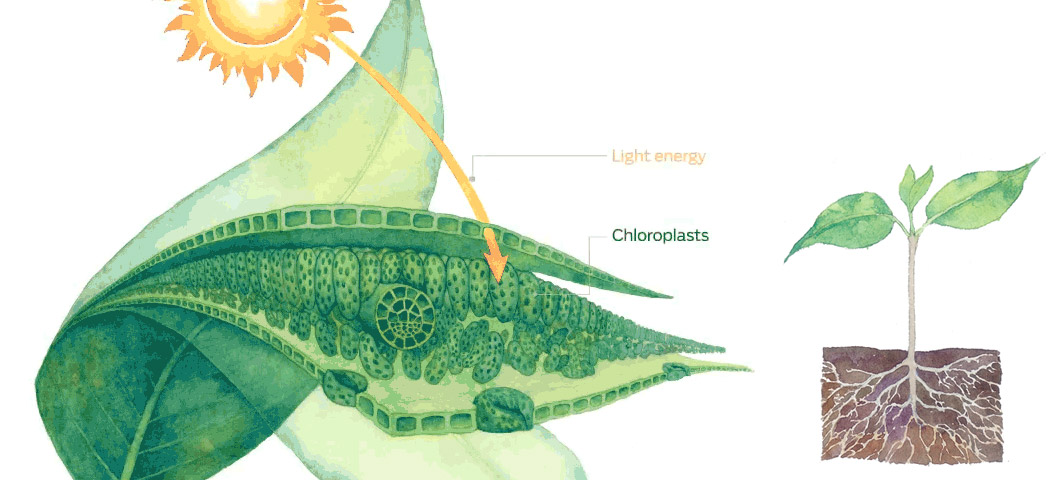
Cells in the leaves of green plants contain tiny structures called chloroplasts. Inside each chloroplast is usually a green pigment called chlorophyll. Chlorophyll and other pigments trap light energy. Plants need that energy to carry out photosynthesis.