Free
The word engine comes from the Latin word ingenerare, which means “to create.”
It follows, then, that a person who creates is an engine-er just as a person who sings is a sing-er. People have been doing the work of engineers since the beginning of civilization, long before the word engineer came about. Here are some highlights of recent engineering accomplishments.
Loading the player...
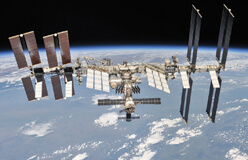
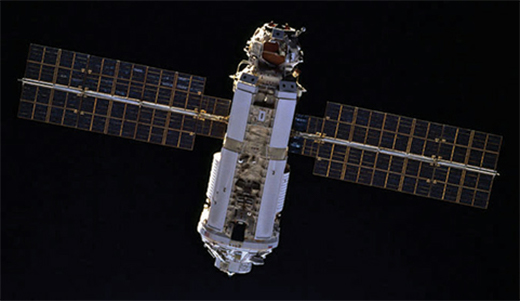
▲ The International Space Station (ISS) orbits just over 250 miles above Earth. It’s the biggest structure humans have ever put into space, about the size of a football field and weighing almost 400 tons. There was no way the ISS could have been built on Earth and then launched into space. It was a problem engineers solved with a logical strategy: They built the ISS piece by piece on Earth and assembled it in orbit. The Zarya Module (right) was the first component to be built. Can you find it in the video of the ISS?

◀ Referring to how hard it is to locate something, you may have heard someone say, “That’s like finding a needle in a haystack.” Imagine if the haystack were 300 million miles of space and the needle were a comet about 2 miles across. What are the chances a spacecraft could find it? The answer is actually, “Pretty good.” In 2014, after a 10-year chase, the Rosetta spacecraft tracked down Comet 67P/Churyumov-Gerasimenko. Rosetta’s robotic lander, Philae, touched down on the comet’s surface. It was the first robot to ever land on a comet. Now that’s an engineering feat!
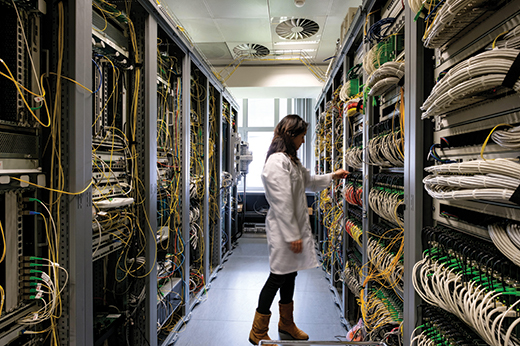
You probably think of the Internet as something you can’t see, something that somehow lives in the air. But it’s not. All around the world there are places called Internet exchange points (IXPs). It’s here where networks connect, and information from many sources is passed from one network to another. The Internet is a network of networks. That’s why it’s called the Internet. Engineers and researchers have been developing the Internet since 1969. ▶
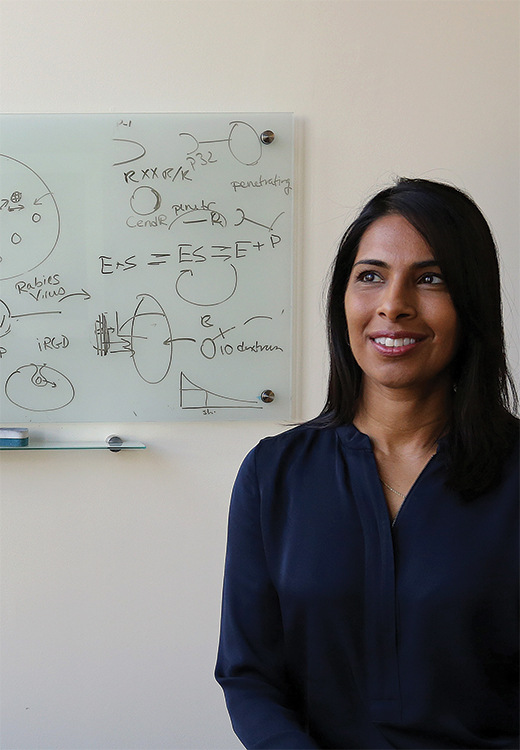
◀ Biological engineer Sangeeta Bhatia explores how to apply nanotechnology — technology associated with atoms and molecules — to people’s health. Specifically, her work focuses on detecting cancer early. To do that, she uses nanoparticles so small they can circulate in the bloodstream. Just how small must the particles be? How will they find cancer? How will they send that information to the outside world? These are some of the questions Bhatia asks as she moves forward with her work. The goal? Someday being able to detect cancer by simply analyzing the chemicals in a patient’s urine.
This ear was printed. That’s right. It came out of a 3D printer, a machine both similar to and different from the printer connected to most people’s computers. Originally developed in 1986, 3D printers use instructions from software engineers to construct an object by adding layer after layer of material onto a bed, or base. 3D printing can be used to create just about anything — bicycles, musical instruments, machine parts, even human body parts. For some projects, the material is a natural resin, like a sap, or gum, from a plant. For others, the material may be metallic powder. Biomedical engineers are using human cells in 3D printing. ▶
Think Piece!
Why might it be useful to be able to 3D print body parts?

A bionic device like this one must be similar to its human counterpart in weight, design, and abilities. No wonder designing these devices involves knowledge of mechanical, electrical, and computer engineering along with biology — all part of the knowledge biomedical engineers use to solve problems that improve the quality of people’s lives. ▼