Free
After much debate, delegates to the Second Continental Congress voted for independence from Britain.
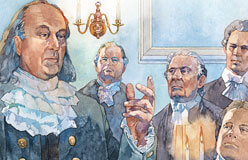
On June 11, 1776, they agreed to form a committee to create a document explaining why the colonies wanted independence. The delegates chose John Adams, Benjamin Franklin, Roger Sherman, Robert Livingston, and Thomas Jefferson. While the others made contributions, the brilliant young Jefferson wrote most of the Declaration of Independence.
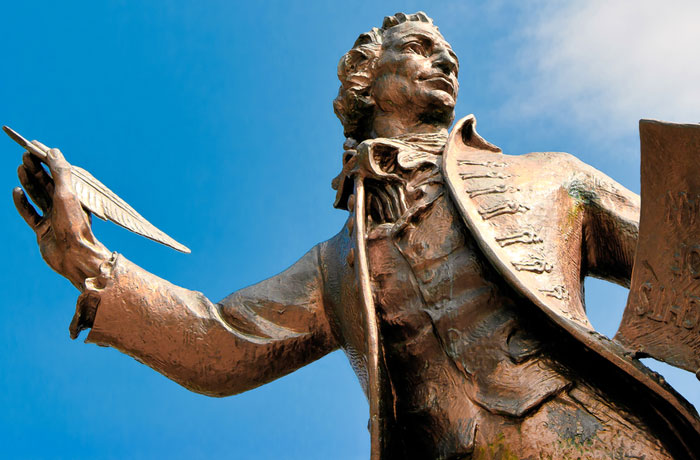
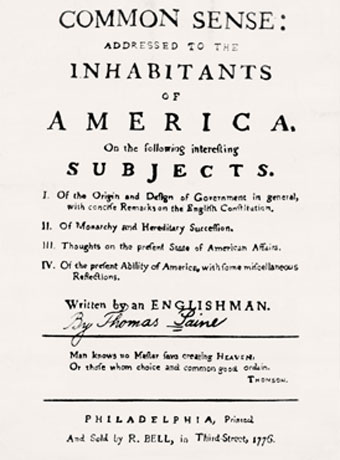
▲ Another colonial writer, named Thomas Paine—who had emigrated from England only a few years before—helped pave the way to separation from Britain. His pamphlet Common Sense argued in plain language that the colonies should become independent and that monarchy was a bad form of government. It sold over 500,000 copies. America’s first bestseller convinced many colonists that they had the right to form their own government.
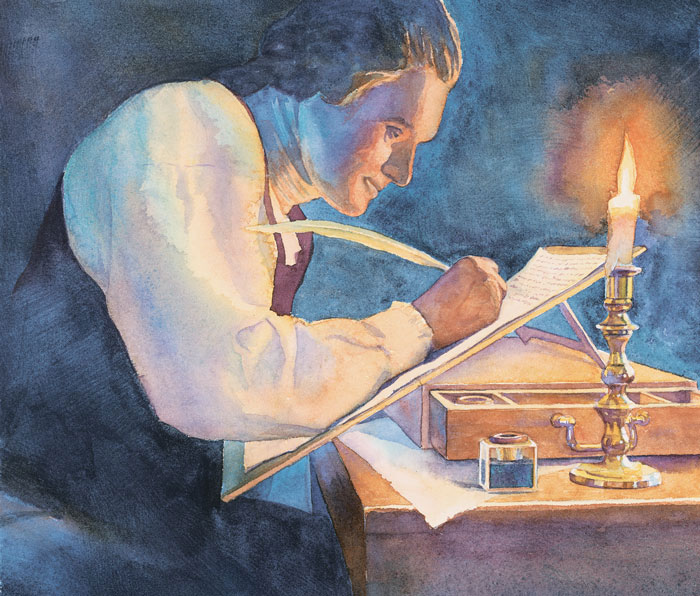
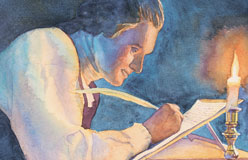
◀ Jefferson wrote much of the nation’s first famous document in a rented room in Philadelphia. At age 33, he was one of the youngest delegates at the convention. The Virginia lawyer was shy and rarely spoke during the Second Continental Congress. When the other committee members asked him to write the first draft of the document, he refused. Eventually, John Adams convinced him to take the job.
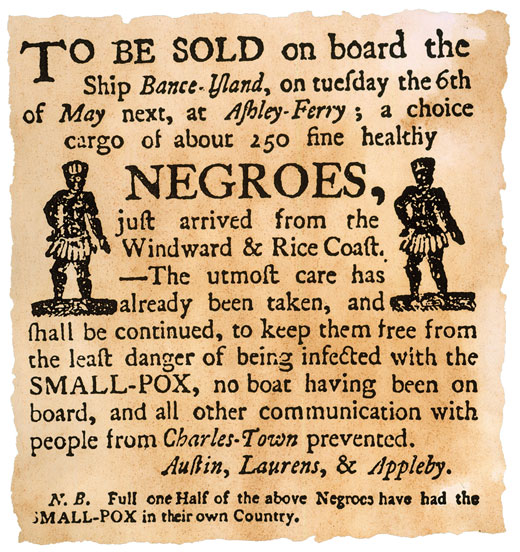
In his draft, Jefferson included a section criticizing King George III for encouraging the slave trade. In Africa, British slave traders exchanged goods for people and then took millions of Africans in chains across the Atlantic Ocean and sold them in the American colonies, West Indies, and Brazil. Crowded into small spaces underneath the decks of ships and given little food or water, many of the Africans died on the long voyage. Once they reached shore, they were treated as property and denied any rights. Many colonial leaders, including Thomas Jefferson himself, owned enslaved Africans. ▶
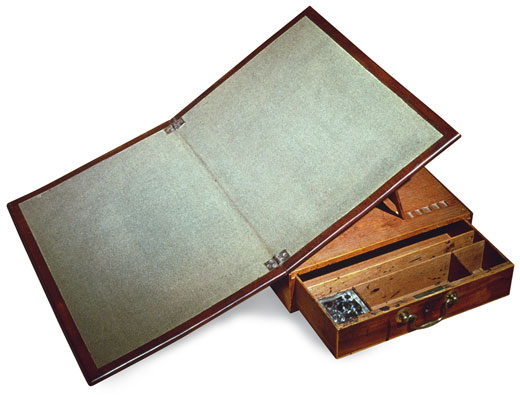
◀ Jefferson took his task seriously. For 17 days, he rose early every morning and sat at a portable desk that he had designed. He never liked to “use two words, when one would do.” He worked hard to include important ideas of the time and to put colonists’ complaints against Britain and the king in clear, plain language.
While most delegates signed the Declaration on August 2, 1776, a few never signed it at all. Some delegates, including Thomas McKean, from Delaware, waited, saying it was too early for independence. He signed the document in 1781. The first signers were the representatives from northernmost New Hampshire and the last were the southern signers from Georgia. ▶
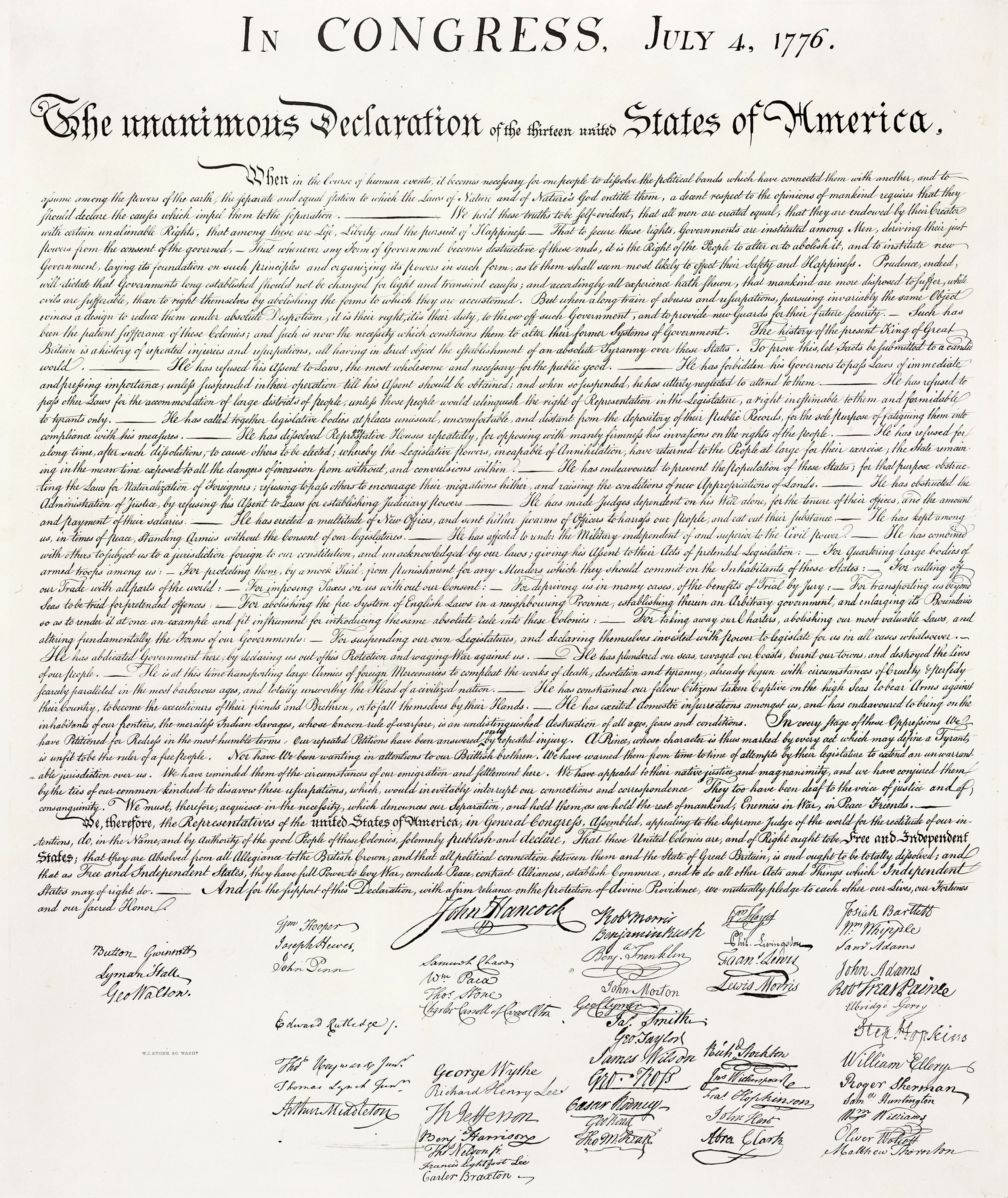
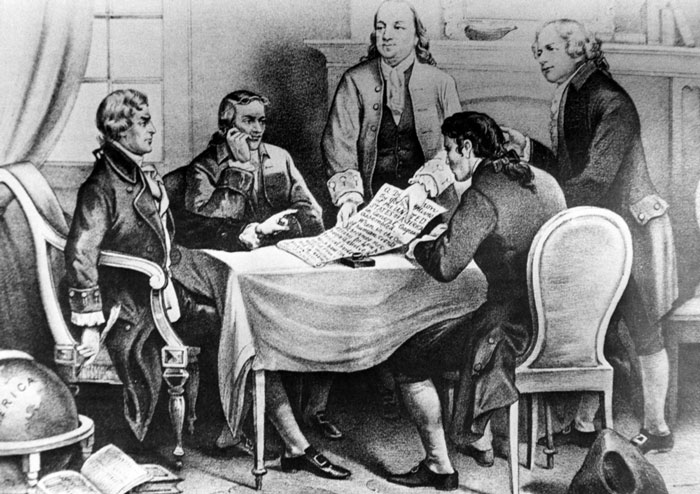
▲ Some committee members made a few small changes in Jefferson’s draft. The whole Congress made several larger changes. Most important, they took out the section criticizing King George III for encouraging the slave trade. Slavery had become an important part of colonial life, especially in the southern colonies. Large farms in the South, called plantations, relied on the free labor of enslaved persons to plant and harvest crops and take care of household chores. Some people feared that leaving in the section on slavery could cause conflict between some northern colonists who objected to slavery and most southern colonists, who supported it.
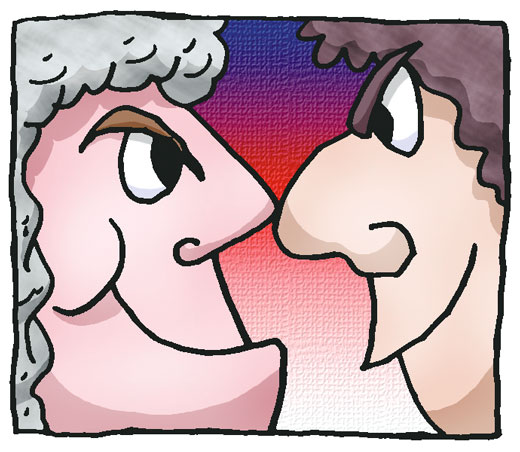
◀ Jefferson and John Adams were friends and rivals who wrote to each other often. Adams died on July 4, 1826, exactly 50 years after the signing of the Declaration. His last words were, “Thomas Jefferson survives.” Adams was wrong. Jefferson had died the same day, a few hours earlier.
Loading the player...
▲ Today, thousands visit Monticello, the Virginia plantation home that Jefferson designed and lived in. The house is filled with examples of Jefferson’s active mind. He kept large clocks in almost every room, so he wouldn’t waste time. He also filled the home with interesting inventions that made life more efficient, like a polygraph machine used to duplicate writing and a revolving bookstand.