Free
After the Boston Tea Party, the British closed Boston Harbor. They said all town meetings had to be approved.
Each new thing the British did made colonists more afraid they’d lose all rights to self-government. Some leaders told colonists to prepare for war. Others tried to calm people down. When fighting broke out, colonial leaders had to take a stand.
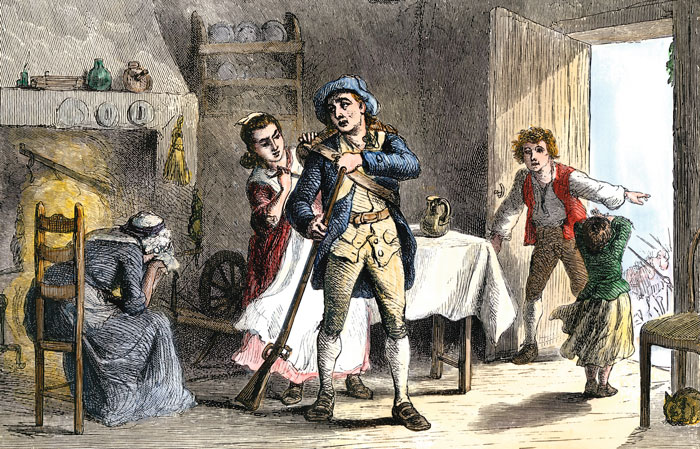
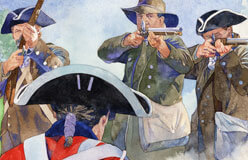
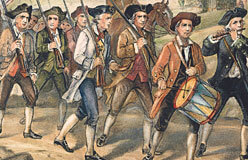
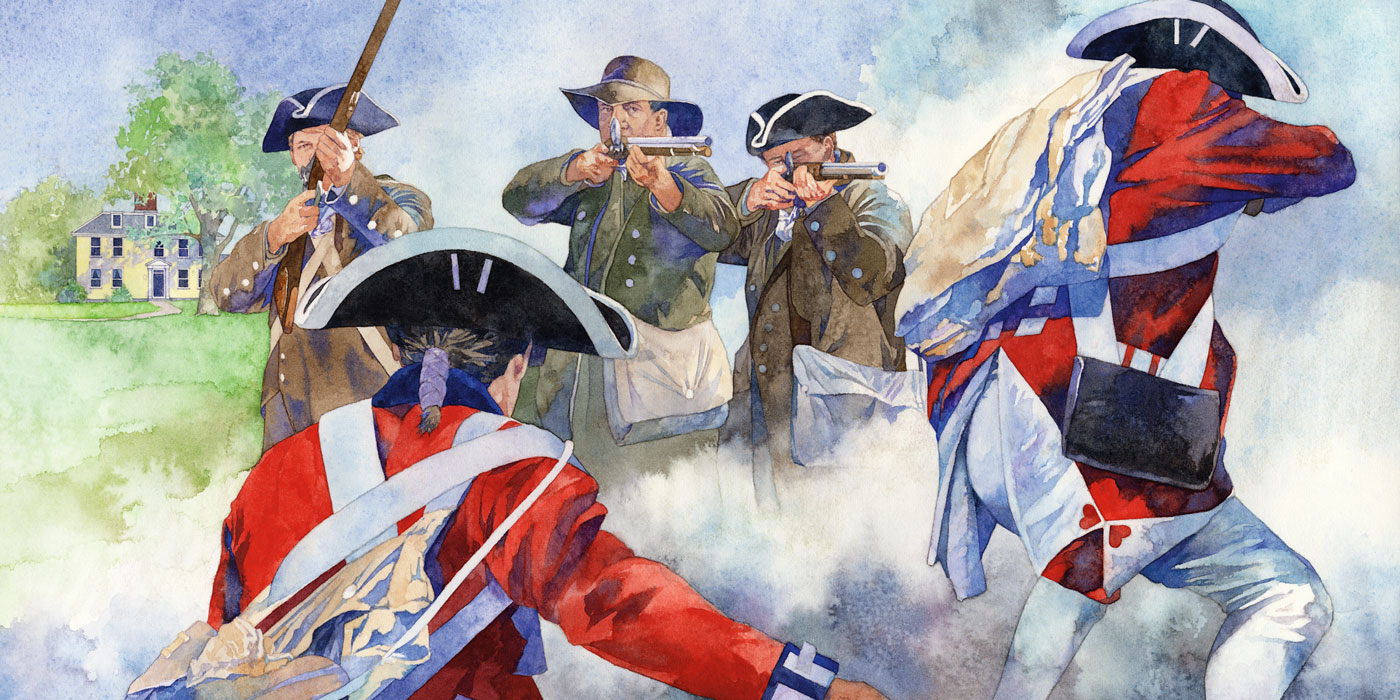
◀ In the early 1770s, many young colonial men joined volunteer fighting units. These were called militias. In Massachusetts, the minutemen militia said they were ready to fight at a minute’s notice.
Colonists were angry about new taxes and other British policies. So 56 colonial leaders met in Philadelphia in 1774 for the First Continental Congress. They came from every colony except Georgia. Delegates (people who speak for others) wrote a paper. It said the colonists had the right to run their own lives. It warned that if the British attacked, they’d fight back. It also asked colonists to stop buying British goods. The delegates agreed to meet again if relations with Britain didn’t improve. ▶
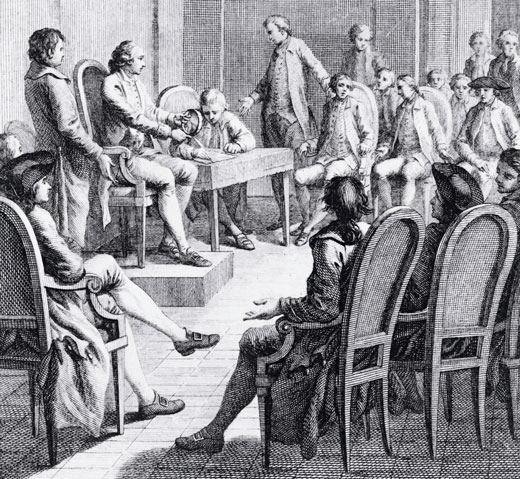
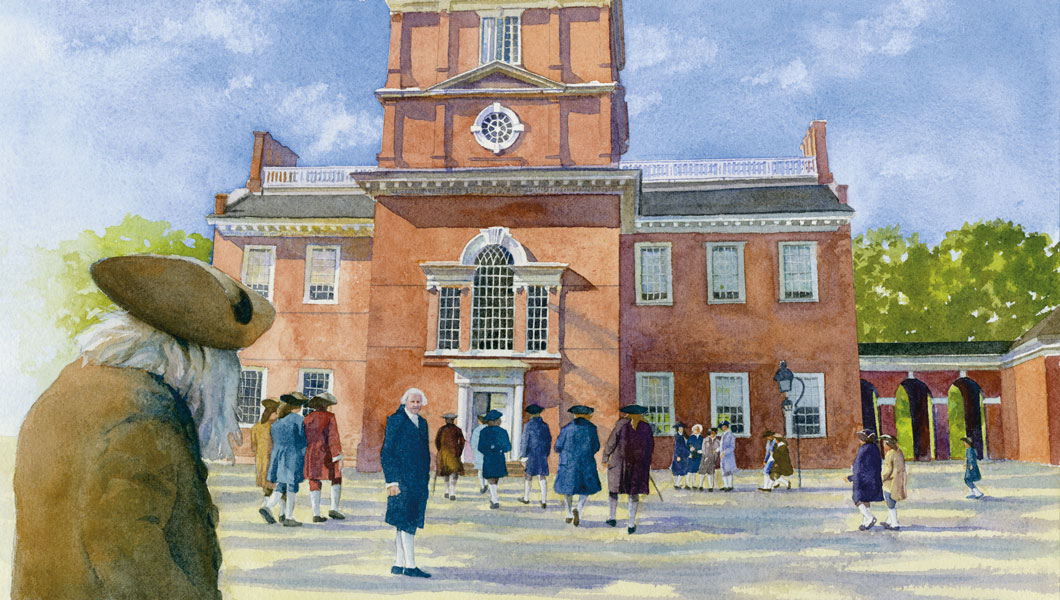
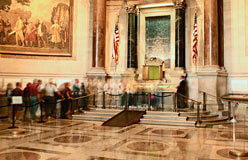
▲ One month later, colonial leaders came to Philadelphia for the Second Continental Congress. They met at the Pennsylvania State House. They talked about a plan of action.
The Key Players at the Second Continental Congress
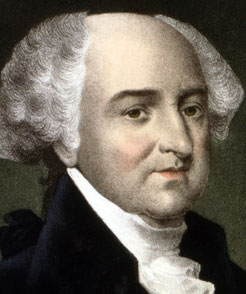
▲ John Adams represented Massachusetts. He was an early supporter of American independence. At the Second Continental Congress, John and his cousin Samuel Adams rejected attempts to make peace with Britain. John said Britain had no right to tax or govern the colonists. He later became the second president of the United States.
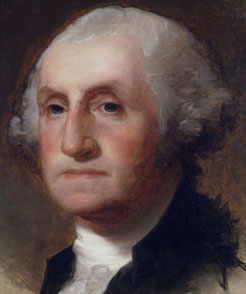
▲ Virginia delegate George Washington was an officer during the French and Indian War. Washington thought that American colonists needed to stand up for their rights, even if that meant fighting the British. The Second Continental Congress named him commander of the Continental Army. Washington went on to become our first president.
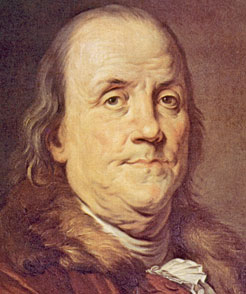
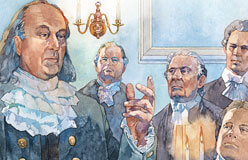
▲ At the Second Continental Congress, Pennsylvania’s Benjamin Franklin set out a plan for a new government. It would unite the colonies. During the American Revolution, Franklin became America’s ambassador to France. He helped talk the French into helping the Americans. Franklin was known for being smart and funny.
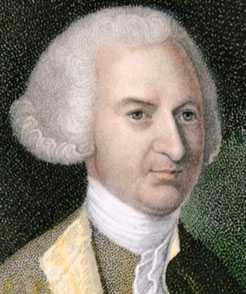
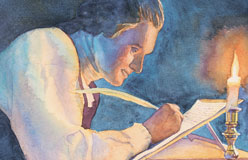
▲ John Dickinson of Pennsylvania wanted the colonies to stay loyal to the British government. He didn’t like what Britain was doing, or its taxes. But he thought that John and Samuel Adams’s ideas for independence were too radical. Dickinson helped write the Olive Branch Petition.
Check It Out!
What was the Olive Branch Petition?
The Olive Branch Petition asked King George III to deal with some of the colonists’ complaints. The king called the colonists traitors. He wouldn’t even read it.
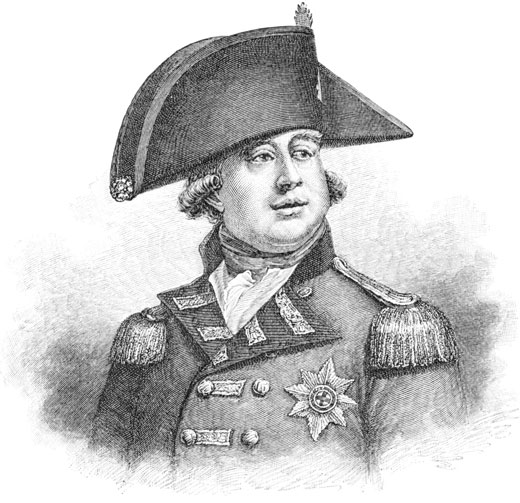
◀ George III was king of Great Britain from 1760 to 1820. That’s 60 years. But he wasn’t king that entire time. In 1811, he was declared unfit to rule because he had gone insane. He believed that colonists had a duty to follow British laws, so he didn’t listen to their leaders’ complaints. Instead, he told his officials to control the colonies through force. He thought military force would make the colonists do what he wanted. But the fighting that began at Lexington and Concord made Americans feel less allegiance to the king. His refusal to make a deal turned many loyal colonists against him.