Free
There are three parts in the Declaration of Independence.
The first explains the basic rights of all people. It says that these rights haven’t been respected. So it’s the colonists’ duty to break away from Great Britain. The second section is the longest. It’s a list of complaints against the king. The third part formally declares independence.
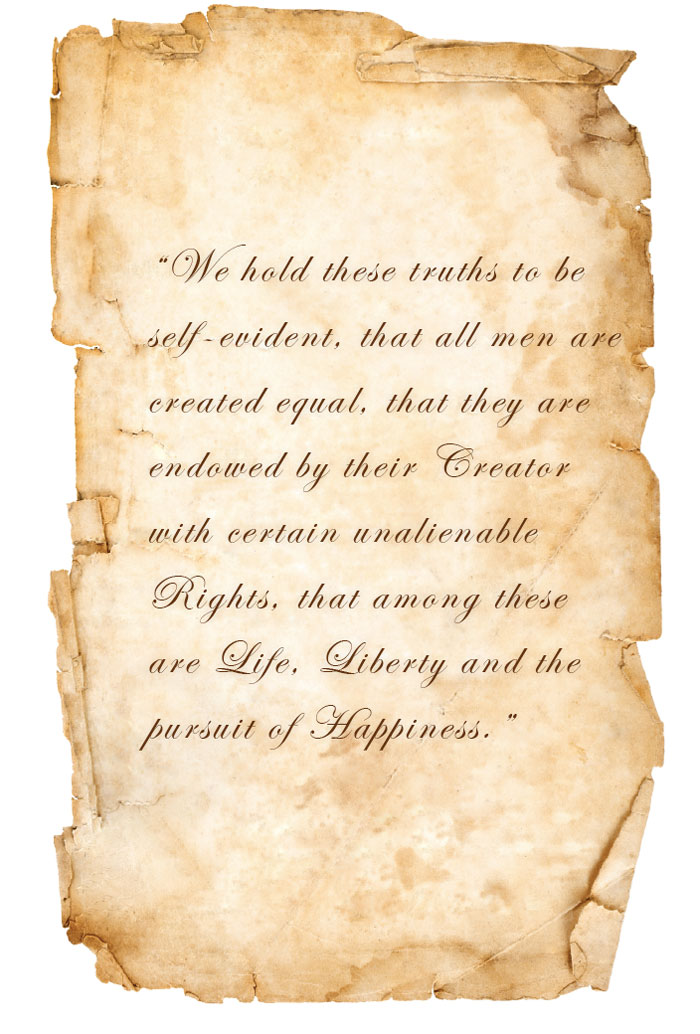
▲ This sentence from the first part of the Declaration is one of the most important in our country’s history. The word all is a big deal. Before, the colonists said the British government denied them their rights as British people. But they couldn’t win that argument. Because the British government said it could decide what British people’s rights were. That’s why, in the Declaration of Independence, the colonists say the rights they want are the rights of all people everywhere. It doesn’t matter where they live. The word equal doesn’t mean that all people are the same. People have different backgrounds. They have different talents. And they have different interests. What equal does mean is that all people are born with equal rights. And the government should respect and protect those rights.
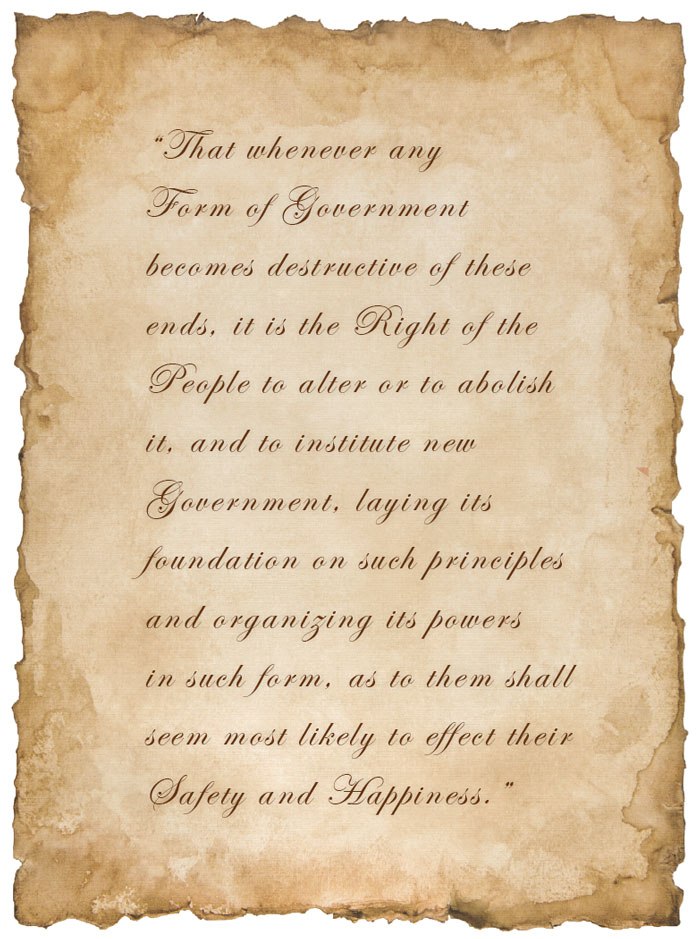
▲ This line from the first part of the Declaration gives the colonists a short but strong reason for declaring independence. It says the British government is working against the colonists’ natural rights. That’s why the colonies get to end their relationship with this government. They can then form a new government that protects these natural rights.
The third part of the Declaration is only 326 words long. It says the colonists tried to settle their problems with Britain nicely. But the king wouldn’t do it. So the colonies declare themselves “free and independent states.” They also say the states have the right to make their own laws. Finally, the colonies agree to work together. The Declaration ends like this: “...we mutually pledge to each other our Lives, our Fortunes and our sacred Honor.” ▶
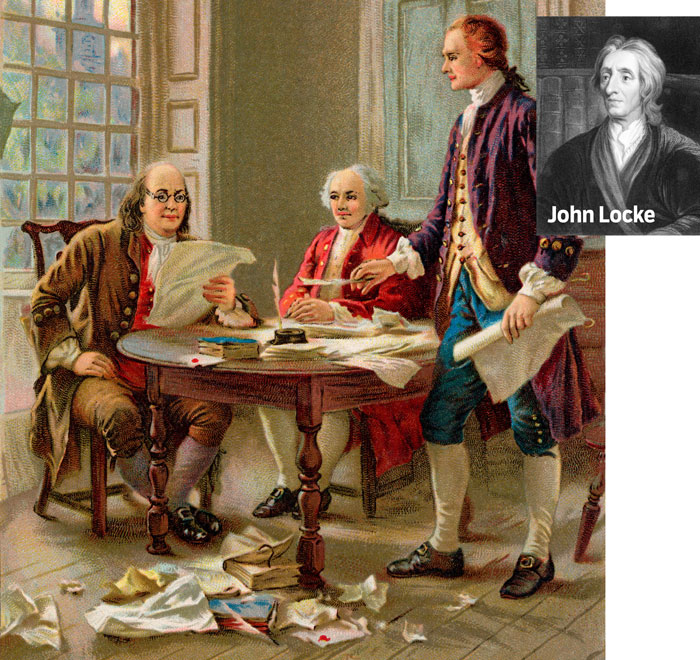
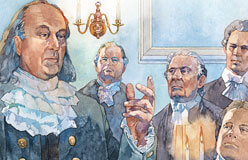
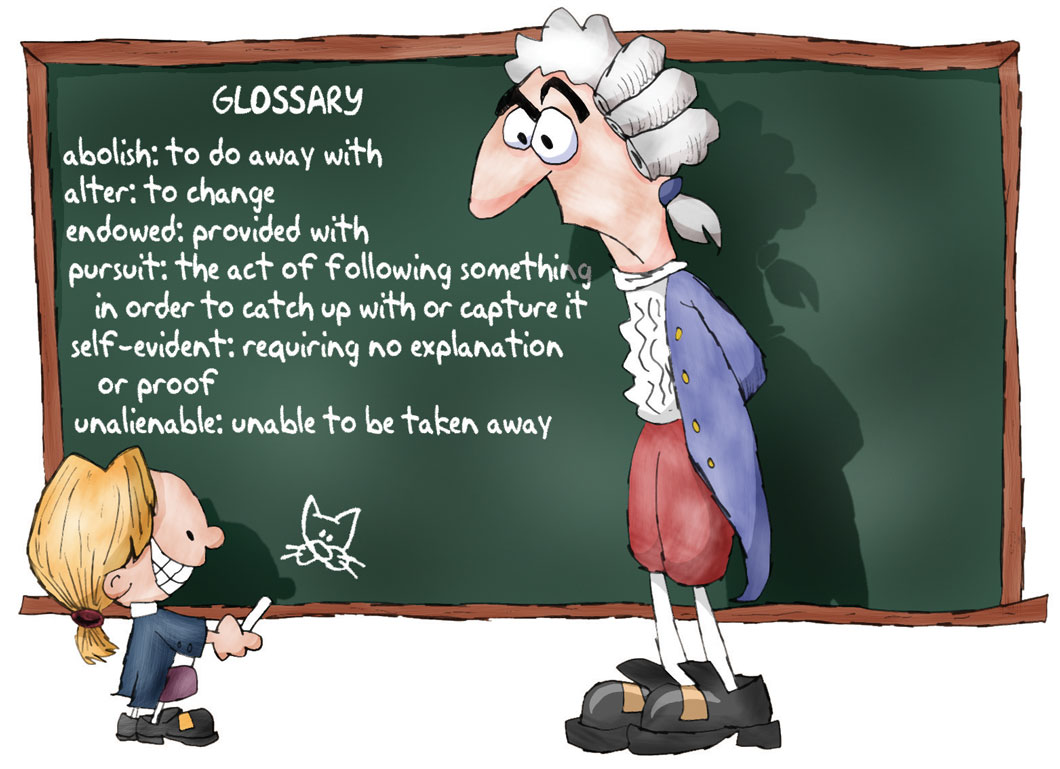
◀ Jefferson used ideas from John Locke, a famous English thinker. Almost 100 years earlier, Locke wrote: “No one ought to harm another in his life, health, liberty or possessions.” Locke thought that life, liberty, and property are natural rights. He said all people were born with these rights. He believed a government’s job is to protect these rights. People should obey the government as long as it does that. But if a government interferes with these rights, they should not obey it. Here (from left to right), Benjamin Franklin, John Adams, and Thomas Jefferson discuss the document.
Some of the 27 complaints against King George III:
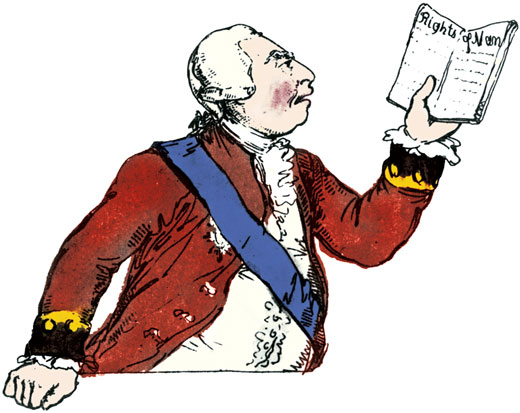
• He wouldn’t give American colonists a voice in Parliament.
• He didn’t allow colonists to pass laws without his OK.
• He forced colonists to give shelter to soldiers.
• He did away with colonial legislatures.
• He taxed colonists unfairly.
• He wouldn’t give colonists fair trials.
• His soldiers burned towns and attacked people.
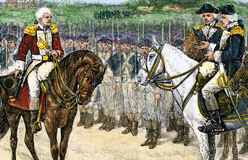
▲ The colonists thought King George III had no right to rule. That’s because he had his army attack his own people. A real king should have protected them.
Think Piece!
Slavery didn’t end for African Americans until 1865. Women didn’t get the right to vote until 1920. Do slavery and denying the vote to women sound like government without representation? That was the complaint many colonists had about British rule.