
Free
Sometimes a name just fits. And whale shark might be one of those names. A whale shark is a shark, not a whale. It’s both the world’s largest shark and the world’s biggest fish.
Whale sharks can be as long as a school bus and just as heavy. Yet, they have no bones. Instead, they have cartilage. (Cartilage is what your ears are made of.) These ginormous creatures move through the ocean slowly, at about three miles an hour. They live in warm, shallow water with a temperature of 70°F or higher.
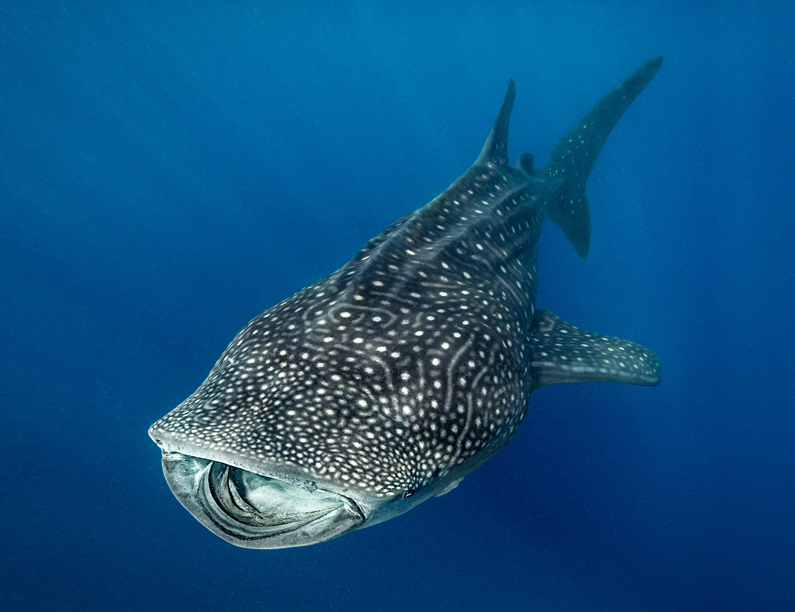
◀ Whale sharks are full of opposites. Their mouth is huge, almost five feet across, but their throat is small. No bigger than an orange. They have the thickest skin of any animal on the planet. You might think their eyes would be big like their body, but they aren’t. Their eyes are barely bigger than yours!
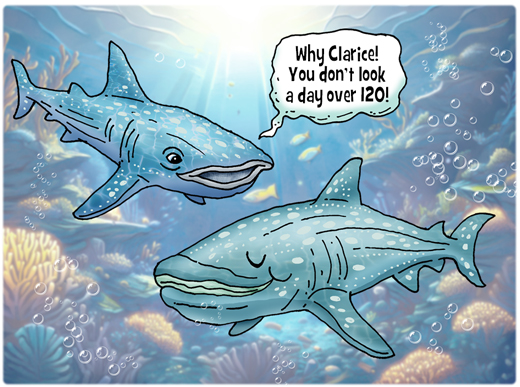
Whale sharks can live up to 130 years! How do we know? Scientists study the shark’s backbone. The vertebrae of the backbone have growth rings. They’re similar to the growth rings on trees. Each year a new ring forms. Scientists count the rings to find out how old the shark is. ▶

◀ These huge fish feed on the tiniest of creatures. Their favorite food is plankton. These are teeny-tiny plants and animals. Some have only one cell. (Algae is a kind of plankton.) Whale sharks also eat small fish. A young whale shark may eat more than 45 pounds of food a day. That’s a lot of plankton!
Loading the player...
▲ To feed, whale sharks open their mouth and suck in water. Over a thousand gallons of water in an hour pour in. (That’s the amount of water in about 30 bathtubs.) All that water passes through their gills and back into the ocean. The food goes down their throat. No biting or chewing needed.





Check It Out!
How dangerous are whale sharks for humans?
Whale sharks are known to be calm and quiet. They aren’t drawn to the smell of blood. And they have never been known to attack a person. The biggest danger may come from their tail. Say the shark moves suddenly, and a person is swimming nearby. That’s a recipe for an accidental injury.
