
Free
You probably know someone who’s a picky eater. But probably not someone as picky as giant pandas. For them it’s all about bamboo. That’s pretty much their whole diet – up to 99 percent of it.
Giant pandas, also known as panda bears and just plain pandas, are rare. You may find them in zoos. But you won’t find them in many other places. These unusual bears live in only one part of the planet – the forests and rainy peaks of six mountain ranges in central China. Why? Because that’s where the bamboo is.
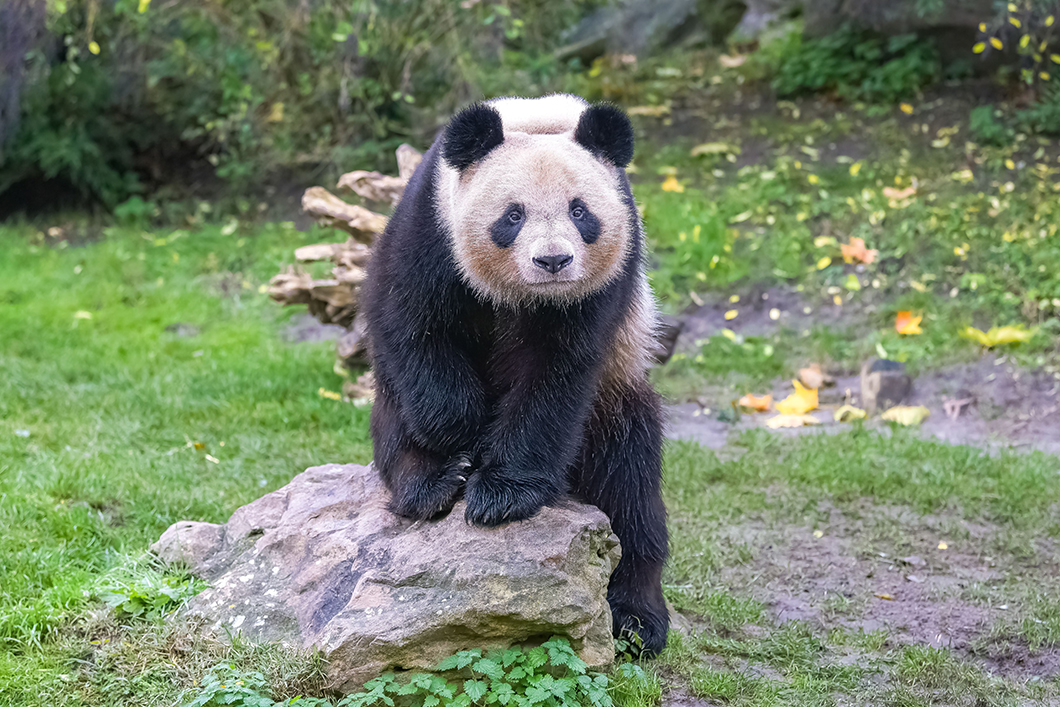
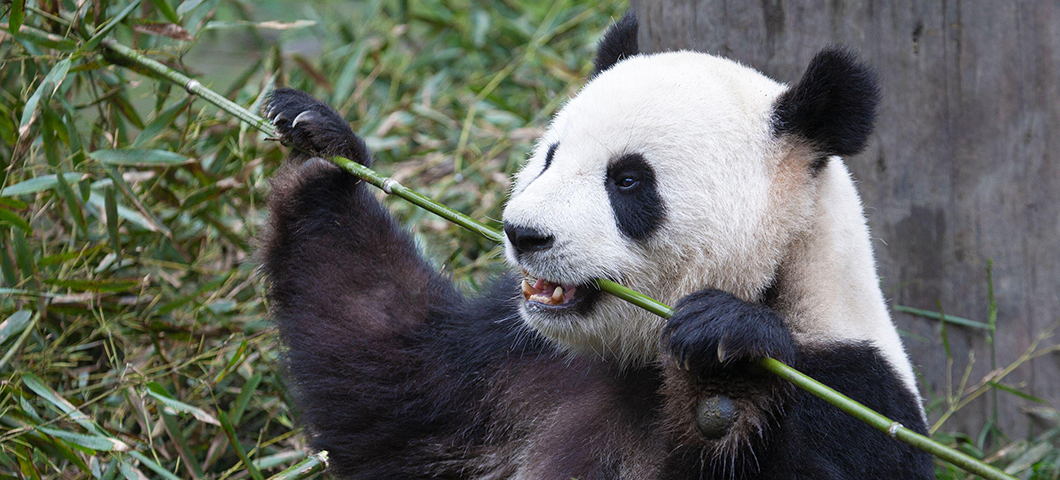
▲ During the summer, giant pandas find cooler weather by climbing to altitudes of 13,000 feet. In winter, they don’t hibernate. Instead, they move down the mountain. There, they find warmer temperatures. All the while, they’re chomping on bamboo. Pandas’ strong jaws and large, flat molars can crush stalks more than an inch thick.
Loading the player...
▲ Pandas have five digits, or fingers, on their front paws. A sixth digit looks like a thumb. But it isn’t. This thumb look-alike is actually an extension of their wrist bone. It can bend to grip slippery stalks of bamboo just as if it were a thumb like ours.
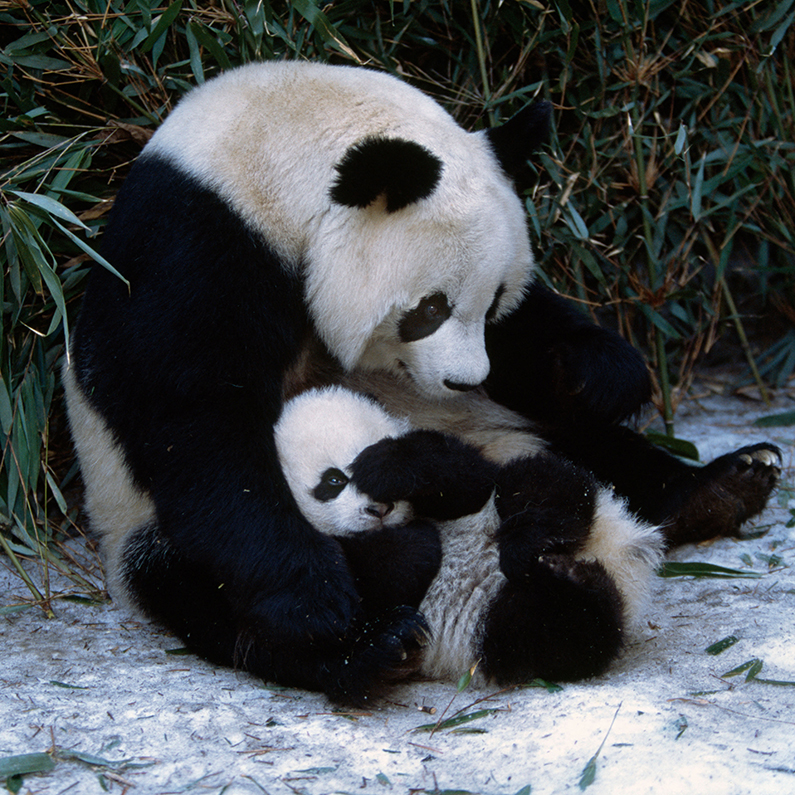
Newborn pandas are tiny. They’re one of the smallest of all newborn mammals. Newborns are about the size and weight of a stick of butter. They have no hair and can’t see. Their eyes don’t even open until they’re almost two months old. That’s about the same time as they start to crawl. ▶

▲ Pandas have to eat a lot of bamboo to stay healthy. From 70 to 100 pounds a day! To do so, they spend more than half their day looking for and munching on it. It’s no wonder they’re known to poo up to 100 times a day!
Check It Out!
Why do pandas eat so much bamboo?
Bamboo is nutritious. But not for pandas. Their body can’t digest most of it. Bears are mostly meat-eaters. That means their digestive system is set up to get what they need from the meat they eat. Pandas have the same kind of digestive system as other bears. But they eat mostly bamboo. Bamboo is far less nutritious than meat, and so pandas have to eat a lot of it to survive.
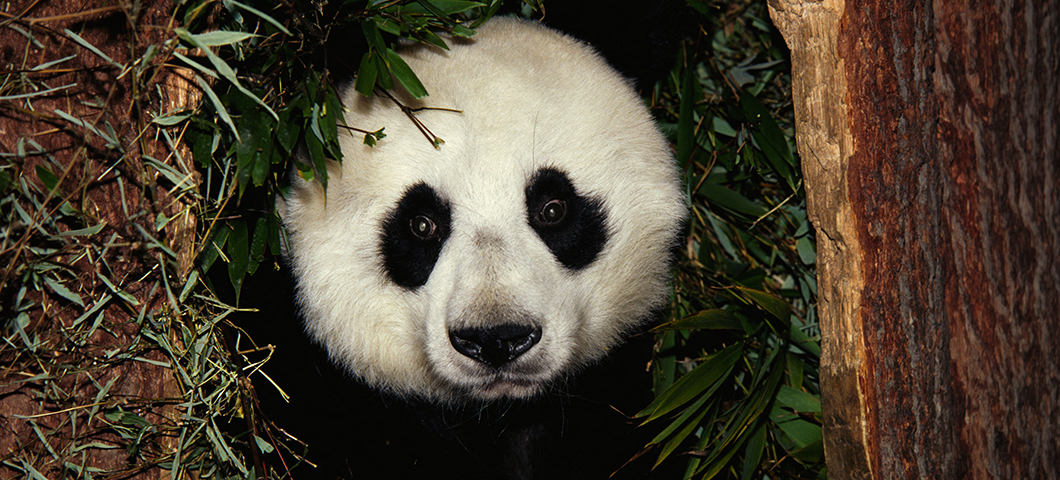
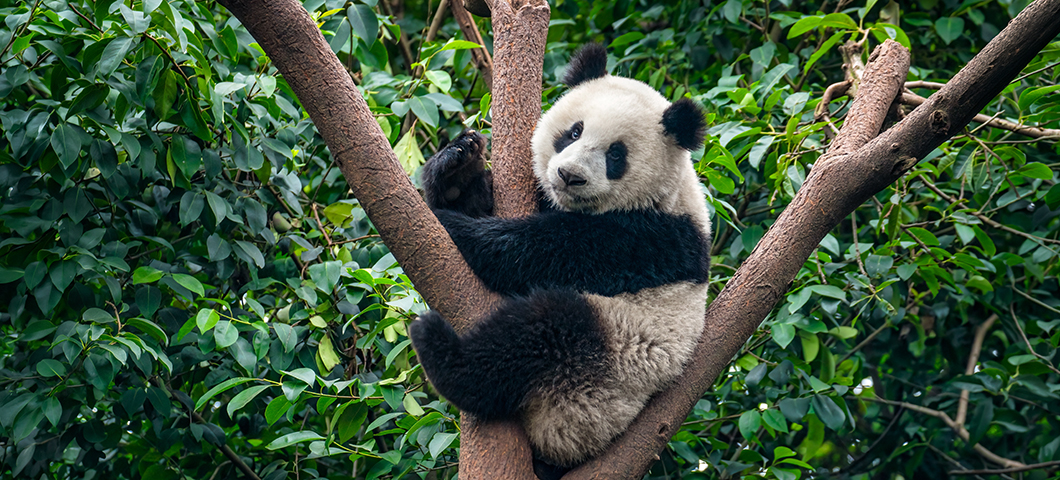
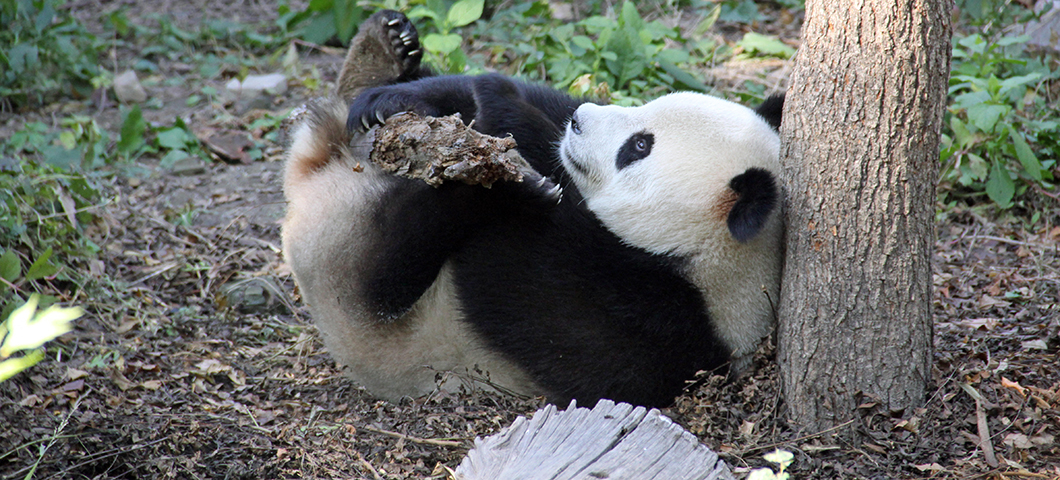
Pandas’ dens may be a fallen tree, a hole in a tree trunk, or an opening among rocks. They use their den mostly to raise their young.
