
Free
Most birds are just about the right size to land on your shoulder. Some are small enough to perch on your outstretched finger. Not the flamingo. Not even the smallest of them.
Of the six kinds of flamingos, the biggest can grow to be almost five feet tall, which may be taller than you. And they can weigh up to nine pounds, which is definitely lighter than you! Flamingos live in places around the world that are hot and humid all year or most of the year – including North and South America, Africa, Asia, and Europe.
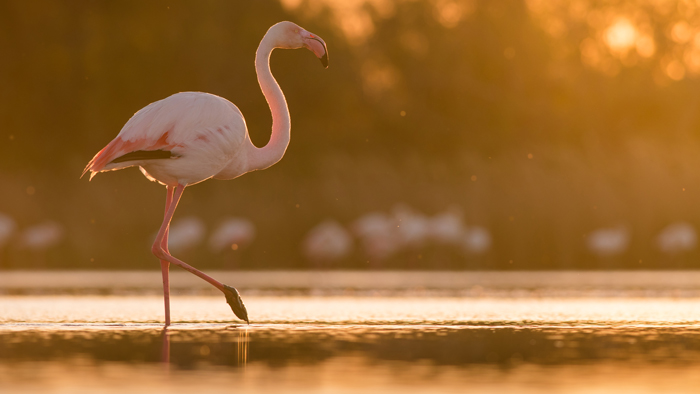
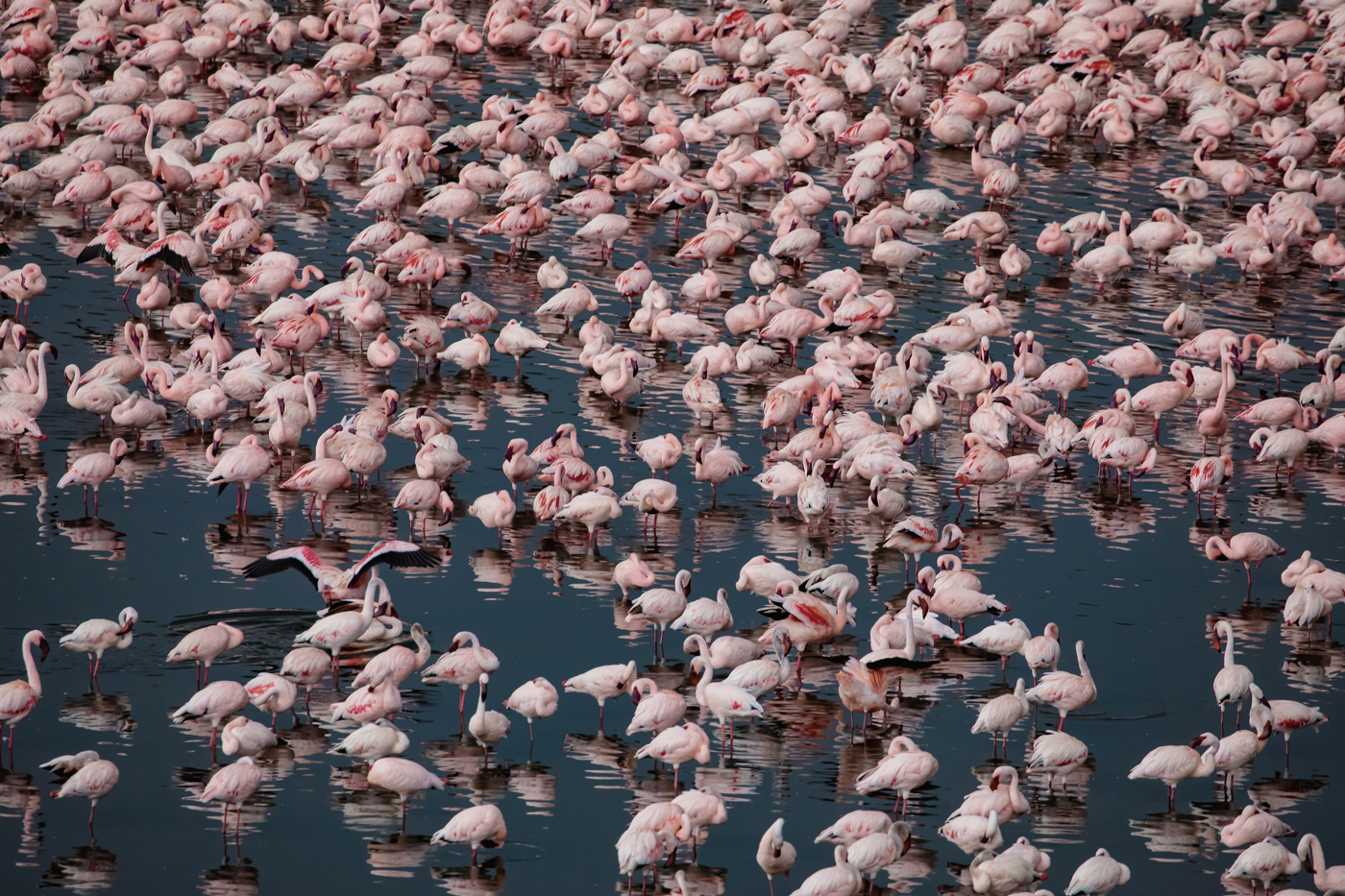
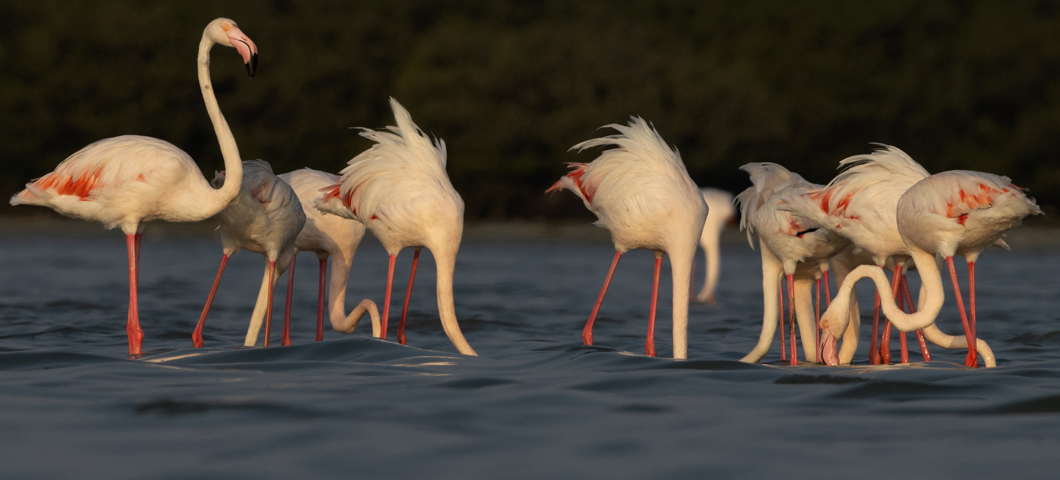
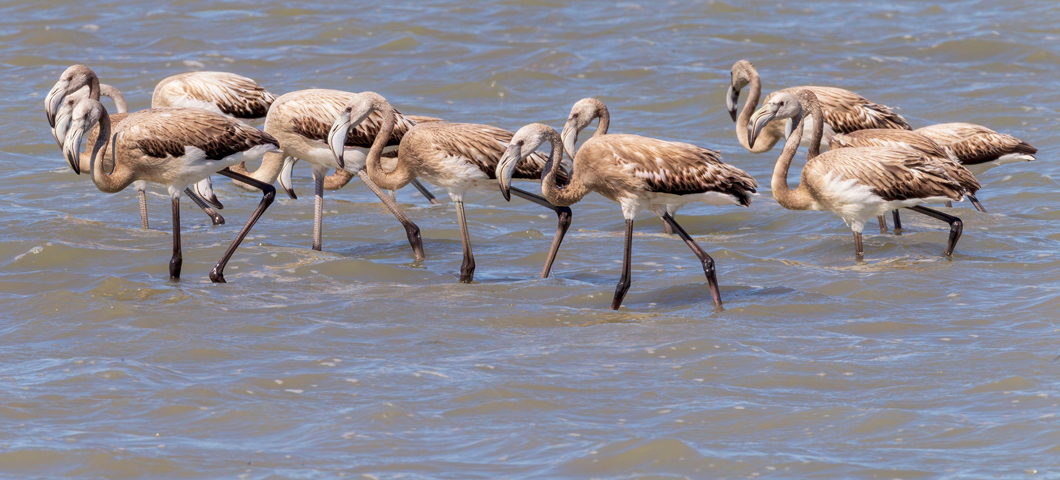
◀ Of the six kinds of flamingos, two types live in Africa, Asia, and Europe. The others are in North and South America. They all live in shallow ponds and lakes of very salty water – so salty that few if any other animals live there. Flamingos’ tough skin protects their legs from getting burned by the salty water.
Check It Out!
Where does the flamingo’s color come from?
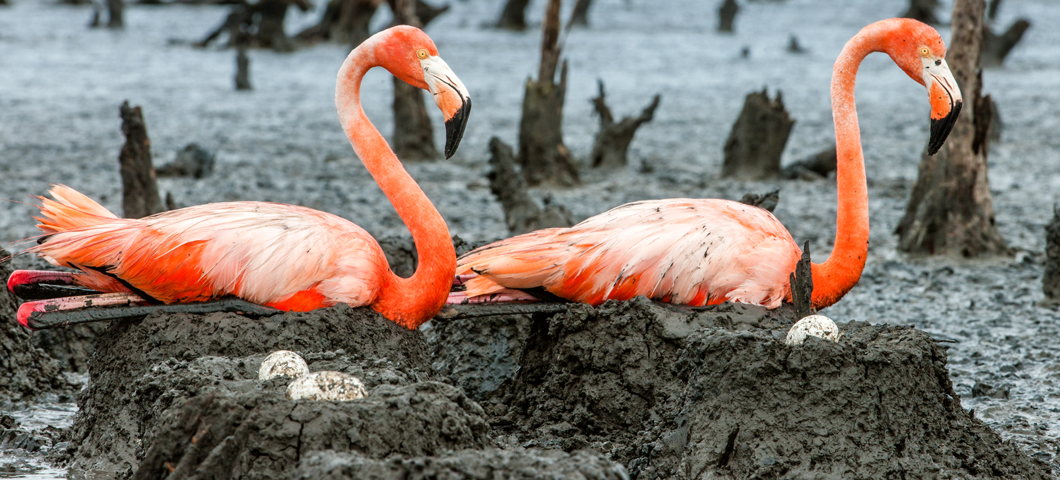
You may have heard the expression, “You are what you eat.” For flamingos, this is literally true. Flamingos feed on tiny algae and shrimp that contain red, yellow, and orange pigments called carotenoids. (Carotenoids turn tomatoes red and carrots orange.) Flamingos digest the pigments, which give their feathers that pinkish color.
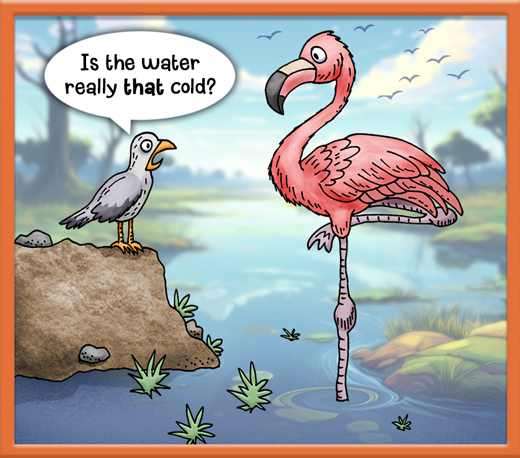
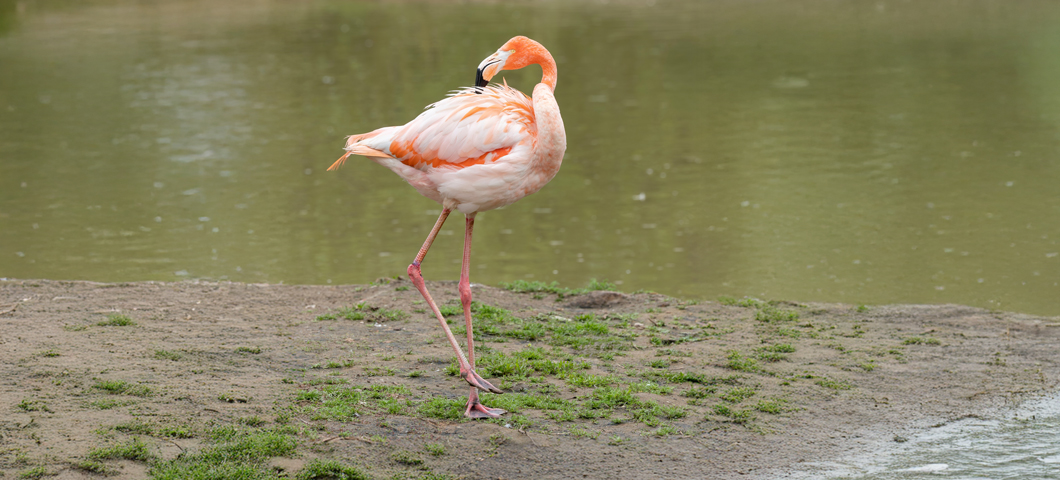
Flamingos lose heat through their legs. That’s why they often alternate standing on one leg and then the other – especially in cold weather. The leg that’s tucked under their body rests and stays warm. When flamingos are in water, the one-leg stand also reduces their contact with parasites that may harm them. ▶
Loading the player...
▲ Flamingos’ bulky body and long legs and neck make it challenging for them to lift off into the air. They start by facing into the wind so when they’re ready to take off, the oncoming air can rush in under their wings. They run and flap their wings to build up speed. And off they go!
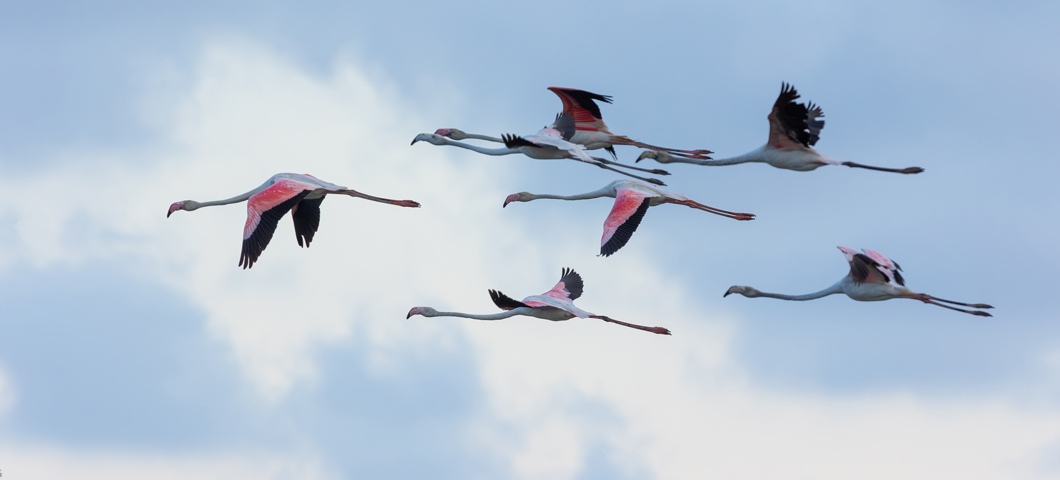
In flight, flamingos stretch out their neck and legs to make an arrow-like shape so they can slice through the air more easily.
