
Free
Your extended family includes you, your parents and grandparents, your siblings, your cousins, and your aunts and uncles. A large family may have a few hundred people. Or even a thousand. A beetle’s extended family is much bigger.
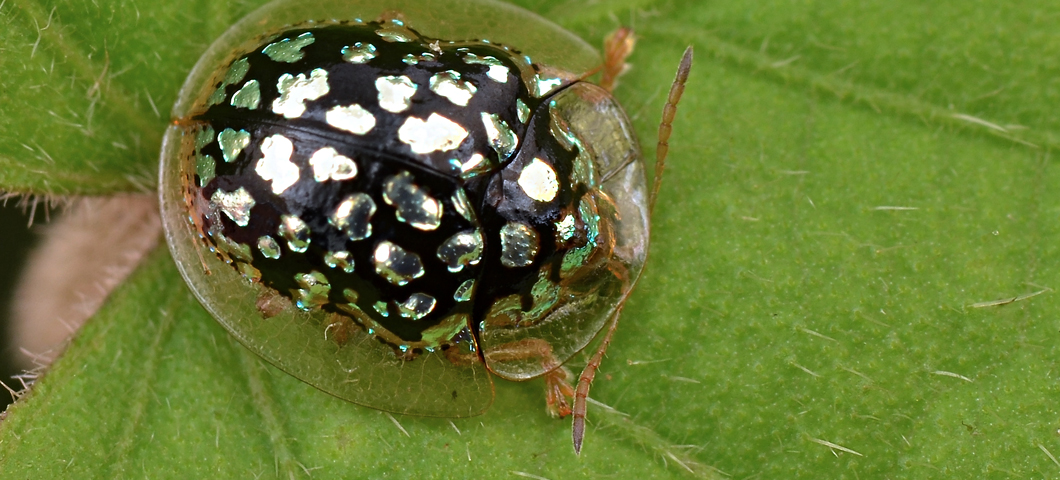
Beetles are the largest group of animals on Earth. The group includes at least 350,000 different kinds! That’s more than the number of people living in Orlando, Florida. Nearly 30,000 different kinds live in the U.S. Including ladybugs. Beetles live almost everywhere. Like all insects, each of them has three body parts, six legs, and two antennae, or feelers.
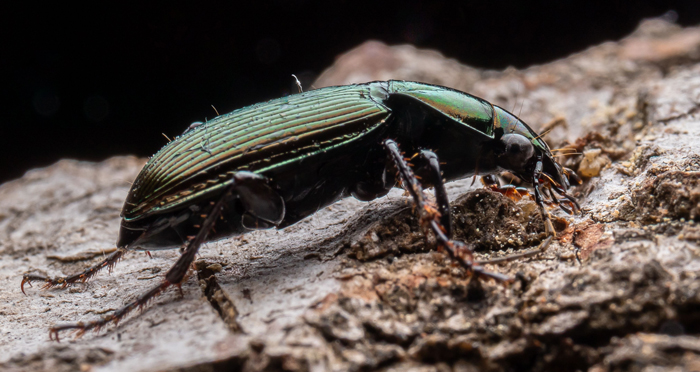
◀ Beetles have a head, a thorax, and an abdomen. The antennae are on their head. So is their pointed mouth. Beetles’ legs and wings are on their thorax. One pair of wings is hard and covers most of the beetle’s body. Underneath these is a second pair of wings that are more delicate. The abdomen is where beetles digest food.
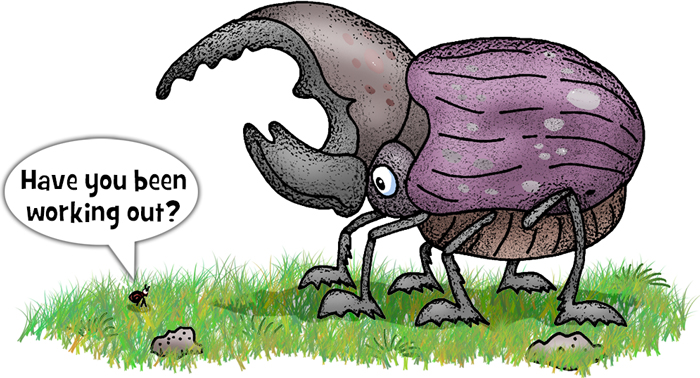
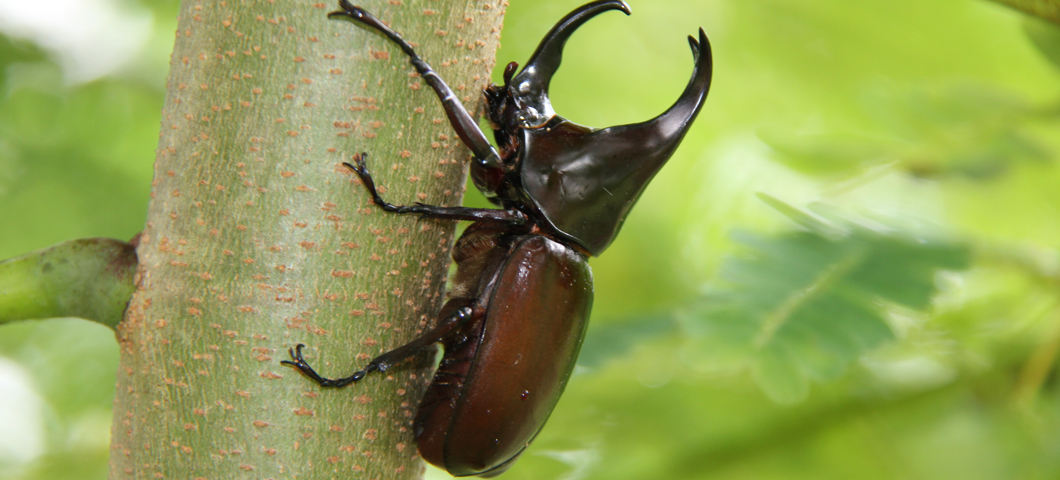
Ladybugs are small. But by no means the smallest beetle. That title goes to featherwing beetles. They’re so small they could fit through the eye of a sewing needle. At the other extreme is the Hercules beetle. These critters can be seven inches long. Just about the size of your hand! ▶
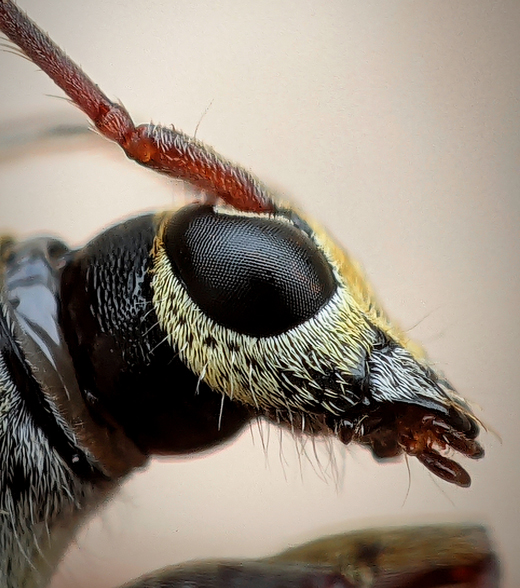
◀ Beetles have compound eyes. Each eye is made up of many tiny eyes. These tiny eyes are called ommatidia. They let beetles see in patterns of light and dark dots. The ommatidia are good at picking up motion. So beetles are better at seeing moving objects than still objects.
Check It Out!
How do beetles protect themselves?
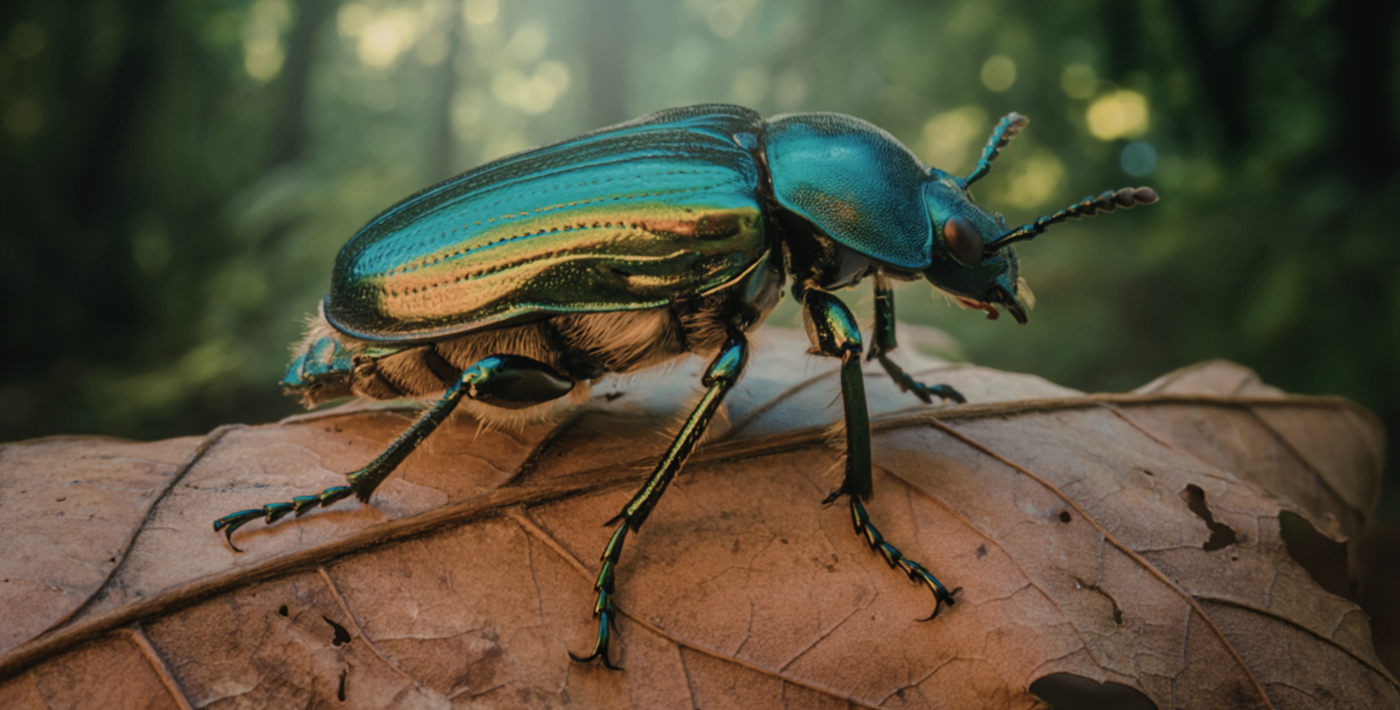
Beetles have been protecting themselves for millions of years. Some blend in with their surroundings. Others play dead. Still others run. Or shoot out a bad-smelling liquid. With some beetles, this liquid turns into a hot gas that keeps enemies away. Many beetles pull their legs and antennae under their “shell” like a turtle.
Beetle Mania!
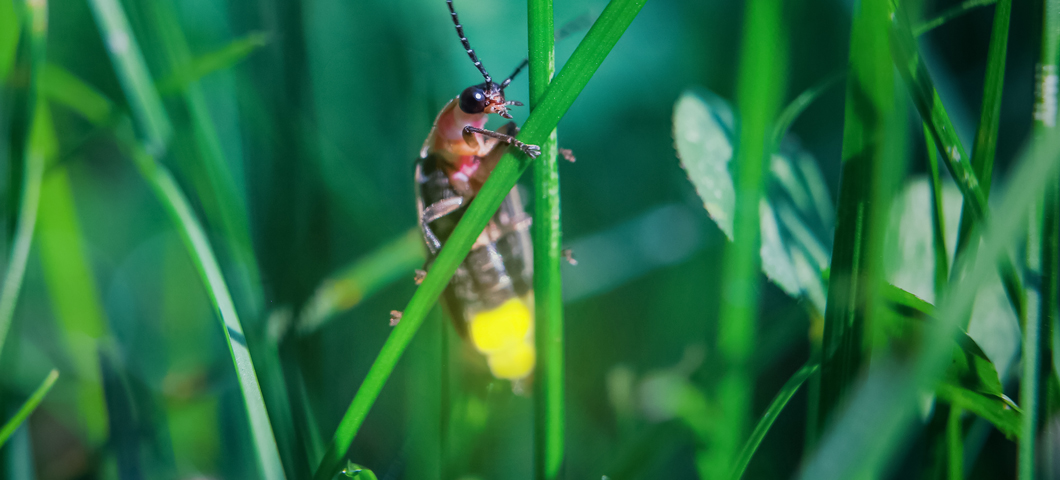
This firefly isn’t a fly at all. It’s a beetle! Fireflies use oxygen from the air to produce light.
